How to Unblock a Toilet Without a Plunger
Written by the Urgent Drainage Solutions teamPublished 10 min read
Quick answer
To unblock a toilet without a plunger, stop flushing, squeeze washing-up liquid into the bowl, wait 20 to 30 minutes, then pour in hot (not boiling) water from waist height. If that fails, use a toilet auger. If the basin, shower or an outside gully are backing up too, the blockage is in the drain, not the toilet.
- Washing-up liquid followed by hot, never boiling, water clears most toilet paper blockages without any tools.
- Boiling water can crack a ceramic pan, so let the kettle stand for a few minutes first.
- A toilet auger is the most reliable no-plunger tool and has a sleeve that protects the glaze; a wire coat hanger can scratch it.
- Bicarbonate of soda and vinegar rarely shift a real blockage, and bleach must never be mixed with acidic products.
- If other fittings are slow or the outside chamber is full, the drain is blocked and no toilet method will clear it.
You can unblock most toilets without a plunger. Stop flushing, squeeze a generous amount of washing-up liquid into the bowl, wait 20 to 30 minutes, then pour in a bucket of hot (not boiling) water from waist height. If that doesn't work, a toilet auger will reach the blockage in the trap or the pipe behind the pan. If the basin, bath or an outside gully is backing up too, the toilet isn't the problem: the drain is, and our blocked drain service will clear it.
Below are seven no-plunger methods, from gentlest to strongest, the honest risks of each, a table matching the method to the blockage, and how to tell when it's the drain rather than the toilet. For plunging, macerators and badly blocked toilets, see our main guide on how to unblock a toilet.
What should you do first when a toilet won't flush?
Stop flushing and stop the cistern refilling. Every flush adds water to a bowl that can't empty, and that's how a blocked toilet becomes a wet bathroom floor.
- Turn off the water to the cistern. Most toilets have an isolation valve on the supply pipe near the cistern. Turn the slot a quarter turn with a flat-head screwdriver, or lift the cistern lid and hold the float up.
- Put on rubber gloves and old clothes. Toilet water carries bacteria, and some methods involve your hands near the bowl.
- Protect the floor. Lay old towels or newspaper around the base of the pan.
- Lower the water level. If the bowl is nearly full, bail some water into a bucket with a jug or old cup. Most of the methods below need room in the bowl.
- Ventilate and clear the room. Open a window and keep children and pets out.
Then run the basin tap for a few seconds. If it drains normally, the blockage is in the toilet or the short pipe behind it, and the methods below have a good chance of working.
Does hot water and washing-up liquid unblock a toilet?
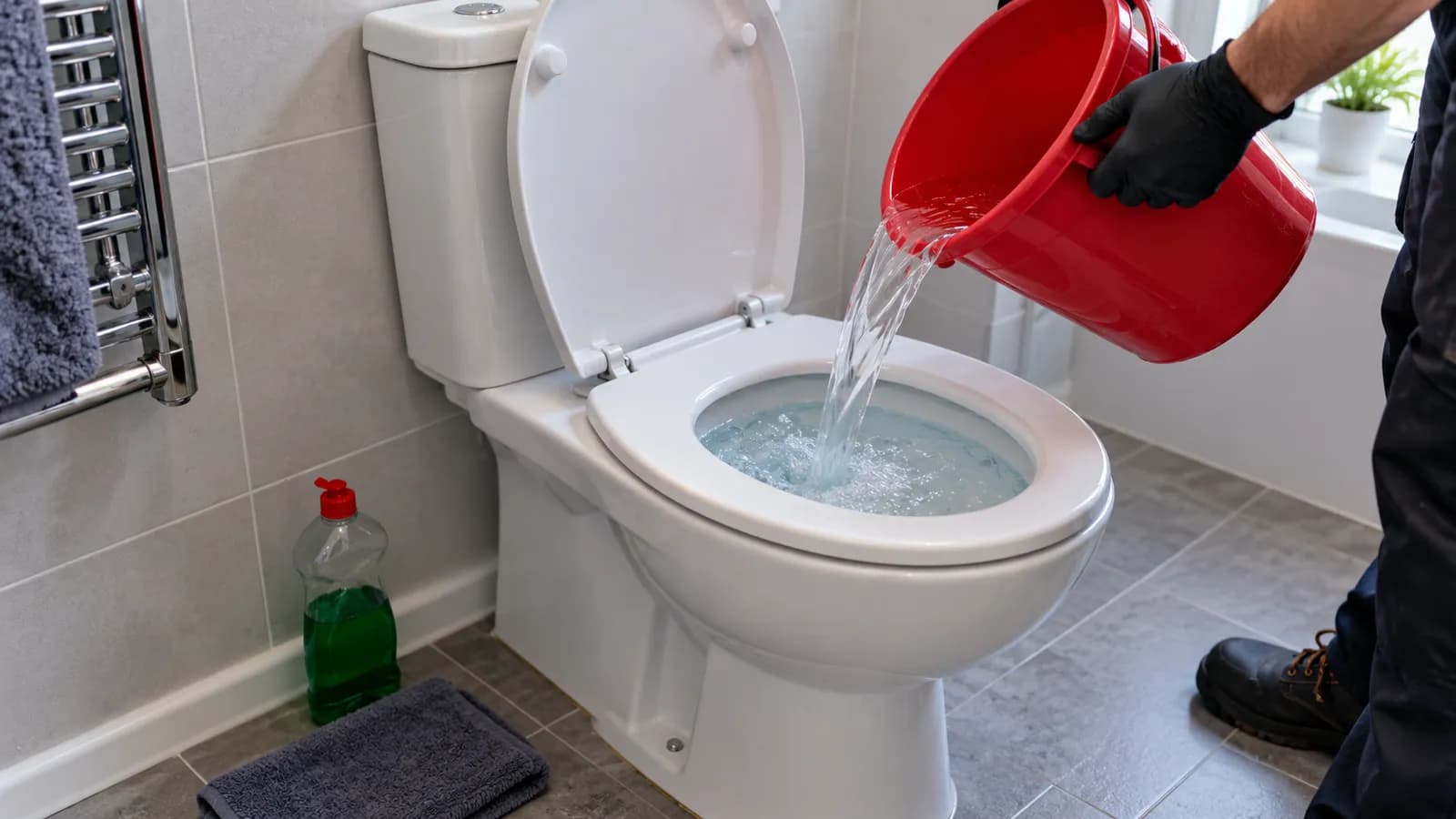
Yes, for toilet paper and waste blockages it is the best first method. Washing-up liquid sinks to the bottom of the bowl and lubricates the blockage, and hot water helps soften the paper.
- Squeeze about half a mug of washing-up liquid into the bowl. Bathroom retailer Drench suggests half a mug and leaving it for 30 minutes.
- Boil a kettle and let it stand for a few minutes. You want hot water, not boiling water.
- Pour the hot water in steadily from about waist height, aiming at the outlet.
- Leave it for another 10 to 15 minutes, then check whether the level has dropped.
- If it is draining, pour in a bucket of cold water to check it flows freely before you turn the cistern back on and flush once.
If some water has drained away but the blockage hasn't fully cleared, repeat it. Paper blockages often give way on the second attempt.
Why shouldn't you pour boiling water into a toilet?
Because it can crack the pan. A toilet is made of ceramic (vitreous china), and pouring boiling water into a cold bowl heats it suddenly and unevenly. Drench warns that water that is "completely boiling" could "crack the porcelain". A cracked pan can't be repaired reliably and has to be replaced, which turns a free fix into a costly one.
Very hot water may also stress the plastic pan connector and seals behind the toilet. Hot water from a kettle that has stood for a few minutes does the job without the risk.
Does the bucket method work on a blocked toilet?
Sometimes. Pouring a full bucket of warm water into the bowl in one go, from waist height, uses the weight and speed of the water to push a soft blockage through. It is how a flush works, without the cistern.
Only try this if the bowl is low enough to take a bucket of water. If the bowl is already half full, bail it out first, or you'll flood the floor. It works best straight after the washing-up liquid method, when the blockage has had time to soften.
How does the cling film trick unblock a toilet?
It turns the bowl into a pressure chamber. Dry the rim, then stretch three or four layers of cling film tightly across the top of the pan so it is completely sealed. Turn the cistern back on and flush once: the film should puff up. Press down firmly and repeatedly on the bubble with flat hands to push air and water through the blockage.
Be realistic about it. HomeServe says the cling film method has "a mixed reputation" and that its success "seems to depend on the water pressure in your toilet system". Never flush with cling film on a bowl that is already nearly full, and stop if water starts seeping out under the film.
Can you unblock a toilet with a wet and dry vacuum?
Yes, if it is a wet and dry vacuum designed to pick up liquids. Never use an ordinary household vacuum, which isn't built for water and is unsafe to use this way.
- Empty the bowl into a bucket so the vacuum isn't filled with dirty water straight away.
- Push the hose a little way into the outlet, then wrap an old towel around it to make a seal.
- Switch the vacuum on, hold the towel in place and let it suck for a minute or two.
- Empty and disinfect the vacuum tank and hose afterwards, following the manufacturer's instructions.
This works well on objects such as toys or bottle tops sitting just inside the trap, because it pulls them back out rather than pushing them further in.
Should you use a toilet auger instead of a plunger?
Yes, if hot water hasn't worked. A toilet auger, also called a closet auger, is a short drain snake in a cranked tube, with a rubber or plastic sleeve over the bend that protects the glaze. It is technically a tool, but it is the most reliable way to clear a toilet without a plunger.
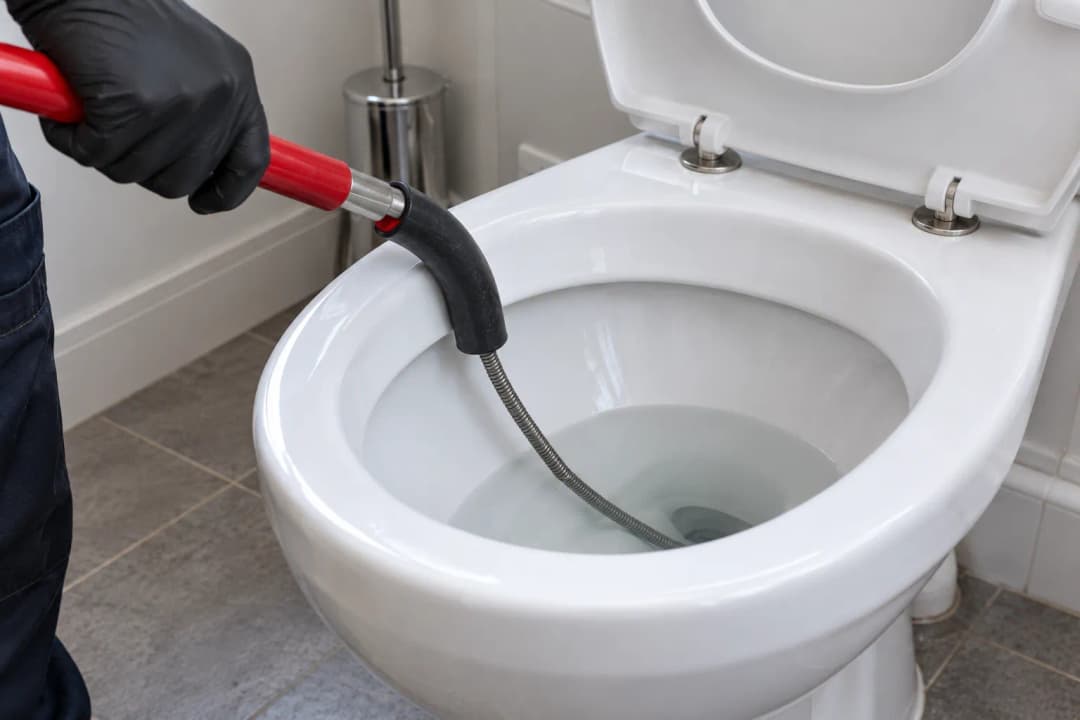
- Pull the cable back so the head sits at the end of the sleeve.
- Rest the sleeve in the bottom of the bowl with the bend facing into the outlet.
- Turn the handle clockwise as you push the cable in, until you feel resistance.
- Keep turning to break the blockage up, or hook it and pull it back out.
- Retract the cable, then test with a bucket of water before flushing.
Augers are cheap from DIY shops, and Drench notes they reach "tough blockages and those that are further down your plumbing system". If your toilet blocks more than once a year, it is worth keeping one.
Is a wire coat hanger safe to use on a toilet?
It works on some blockages, but it can scratch the bowl. Unwind a wire hanger into a straight length with a small hook at one end, wrap the hook in a cloth or tape to soften it, then feed it gently into the outlet and push and pull.
Both Drench and HomeServe warn that this method risks scratching the ceramic. Scratches in the glaze hold dirt and stain permanently. HomeServe also says it "often has only partial success" because it pokes a hole through the blockage rather than clearing it, so the toilet can re-block. If you have a choice, use an auger.
Do bicarbonate of soda and vinegar unblock a toilet?
Rarely, on anything more than a slight blockage. The fizzing looks impressive but has little force. In Which? testing on drains, bicarbonate of soda and vinegar "wasn't enough in any of our attempts to remove a hairball", and an expert it quotes says home remedies "may tackle some of the smell of a blocked drain, but they're not strong enough" for a drain that is really clogged.
If you try it, use hot rather than boiling water afterwards, and don't add bleach or any other product to the bowl later. Our guide on whether bleach unblocks drains explains why bleach isn't an unblocker.
Are chemical or enzyme drain cleaners safe in a toilet?
Use them with great care, and only if the label says they are suitable for toilets. Many drain unblockers are made for sinks and showers, not toilets.
- Caustic unblockers. Many contain sodium hydroxide. The UK Health Security Agency says skin contact with stronger solutions "can cause pain, burns and ulcers", and eye contact can cause burns. A full bowl can splash it back at you if you then try an auger or bucket.
- Bleach. Which? warns that bleach can react with acid-based products such as limescale removers and vinegar, risking toxic gas, and that it shouldn't be left undiluted in the toilet bowl for more than a few minutes.
- Enzyme and bacterial products. These work slowly on organic waste. Check the label: they won't break down wipes, sanitary items or objects.
Never mix products, and tell anyone who comes to clear the toilet exactly what you have put in it.
Which no-plunger method suits which blockage?
Match the method to what is likely blocking the toilet. This table is a quick guide to which method to try first.
| Method | Toilet paper | Wipes or sanitary items | Solid object (toy, bottle top) | Blocked drain outside | Main risk |
|---|---|---|---|---|---|
| Washing-up liquid and hot water | Good | Poor | No | No | Cracked pan if water is boiling |
| Bucket of water from height | Fair | Poor | No | No | Overflowing bowl |
| Cling film pressure | Fair | Poor | No | No | Water seeping out under the film |
| Wet and dry vacuum | Fair | Fair | Good | No | Electrical risk with the wrong vacuum |
| Toilet auger | Good | Good | Fair | No | Pushing an object further in |
| Wire coat hanger | Fair | Poor | Poor | No | Scratched glaze |
| Bicarbonate of soda and vinegar | Poor | No | No | No | Toxic gas if bleach is added later |
| Professional rodding or jetting | Good | Good | Good | Good | None to you |
What should you never do to a blocked toilet?
- Don't keep flushing. It only raises the water level and risks an overflow.
- Don't pour in boiling water. Let the kettle stand first.
- Don't mix chemicals, and never follow vinegar or limescale remover with bleach.
- Don't force a solid object. Once something hard passes the trap, it can wedge in the soil pipe and the pan may have to come off.
- Don't use a household vacuum or any electrical appliance not designed for water.
How do you know if the blockage is in the drain, not the toilet?
If more than one fitting is affected, the drain is blocked. Signs include the basin, bath or shower draining slowly, the toilet water rising or bubbling when another fitting empties, a sewage smell, or water coming up through an outside gully.
Check the inspection chamber (manhole) outside if you can lift the cover safely. If it is full of water and waste, the blockage is further down the drain and no amount of work at the toilet will clear it. If it is empty, the blockage is between the toilet and that chamber. Our guide on how to unblock an outside drain shows how to find and check it, and toilet backing up into the house covers what to do if sewage is coming up.
If neighbours are affected too, the problem may be in a shared drain or public sewer. Citizens Advice explains that you are responsible for drains inside your property boundary, but the water company is responsible for lateral drains you share with neighbours and for public sewers, so contact them first.
How do you stop a toilet blocking again?
Only flush pee, poo and toilet paper. When the government announced its ban on wet wipes containing plastic in England, gov.uk stated that "wet wipes contribute to 94% of sewer blockages". The ban is expected to come into force in spring 2027, but even plastic-free wipes shouldn't be flushed.
- Put a lidded bin in every bathroom for wipes, pads, nappies and cotton buds.
- Flush part-way through if you use a lot of paper.
- Keep a toilet auger or flange plunger in the house so you aren't improvising next time.
- If the same toilet blocks every few weeks, read why your toilet keeps blocking.
Our guide to what not to flush explains how wipes and fat combine into fatbergs in the sewer.
When to call a professional
Call a professional if the washing-up liquid method and an auger haven't worked, if an object is stuck past the trap, if more than one fitting is slow, if the outside chamber is full, or if the toilet keeps blocking. Stop straight away if waste is coming up into the house, and see our emergency drainage page for what to do while you wait.
Our blocked drain service starts from £120 + VAT, with no call-out fee and a fixed price agreed before any work starts. We clear blocked toilets and drains across Nottingham, Nottinghamshire, Derby, Leicester and Lincolnshire, 7 days a week from 6am to 8pm, with emergency call-outs 365 days a year. Call 07300 600 950 or book online.
Sources
- Drench: how to unblock a toilet
- HomeServe: how to unblock a toilet
- Which?: how to unblock a sink
- Sodium hydroxide: general information (UK Health Security Agency)
- New law bans plastic wet wipes to protect rivers and seas (gov.uk, 18 November 2025)
- Citizens Advice: who is responsible for repairing drains and sewers
Frequently Asked Questions
Cite this guide: “How to Unblock a Toilet Without a Plunger”, Urgent Drainage Solutions, 16 October 2026. https://urgentdrainagesolutions.co.uk/blog/unblock-toilet-without-plunger

Need A Drainage Engineer?Book Online Today