
Blocked Drain Outside? How to Unblock an Outside Drain
Written by the Urgent Drainage Solutions teamPublished Updated 6 min read
Quick answer
To unblock an outside drain, wear gloves, lift the gully grate, scoop out leaves, silt and fat, then push drain rods into the outlet and flush with a hose. Check the inspection chambers downhill: a full chamber means the blockage is further down. If neighbours are affected, report it to the water company before paying anyone.
- Most outside blockages are leaves, silt, fat or wipes in the gully or the first stretch of pipe.
- Inspection chambers tell you where the blockage is: the last full chamber is just above it.
- You are responsible for drains inside your boundary serving only your home; shared pipes are usually the water company's.
- Never climb into a chamber or lift covers in the road or pavement; sewers and manholes can hold toxic gas.
- Our blocked drain service starts from £120 + VAT with no call-out fee and a fixed price agreed first.
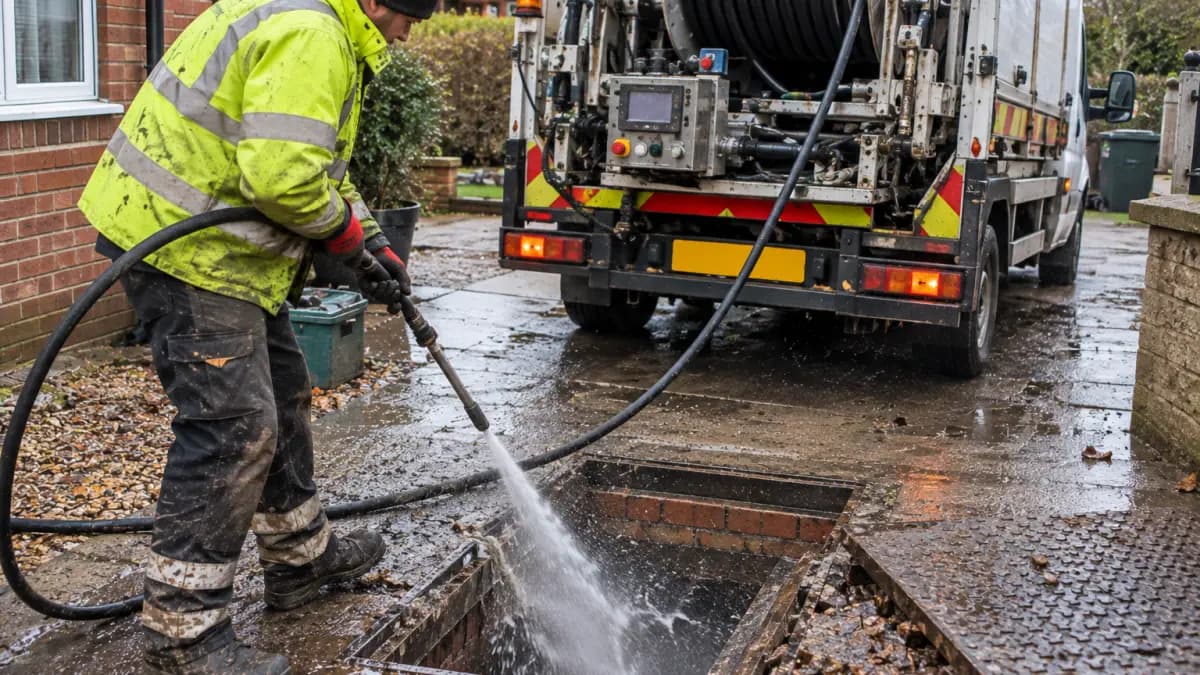
To unblock an outside drain, put on gloves, lift the gully grate, scoop out the leaves, silt and debris by hand, then push drain rods into the outlet pipe and flush it with a hose or a few buckets of water. If the water still won't go, or the inspection chamber further down is full, the blockage is deeper in the pipe and may need rodding from the chamber or drain jetting. Our blocked drain service clears both.
This guide covers what to check first, the safe DIY steps, how to find where the blockage is, and who is responsible for fixing it.
What should you check when there's a blocked drain outside?
Work out which kind of drain it is and how far the problem goes. Most homes have two kinds of outside drain you can see:
- A gully: the small grated opening at ground level that takes water from downpipes, the kitchen sink or the washing machine.
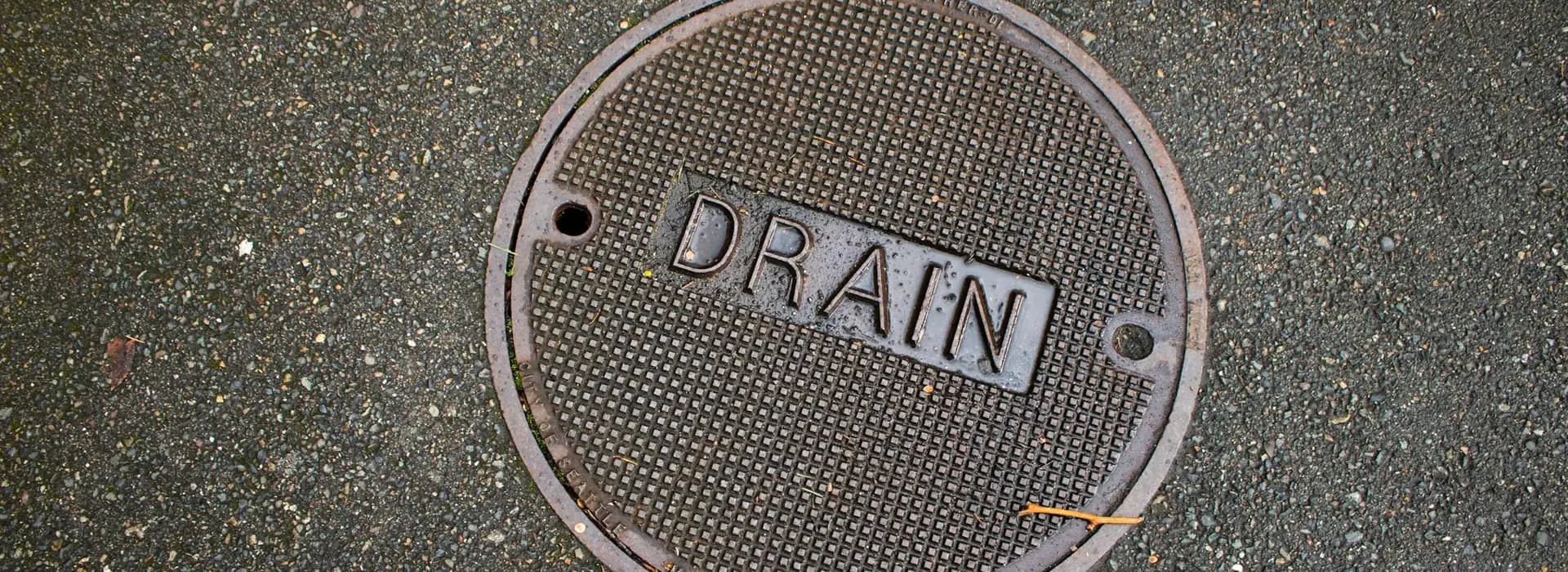
- An inspection chamber: the square or round cover in the drive or garden where underground pipes meet or change direction. Approved Document H describes inspection chambers as "chambers with working space at ground level", which is exactly what makes them useful for clearing blockages.
Then answer three quick questions. Is only the gully full, or are chambers full too? Is it rainwater, or sewage and toilet paper? Are the neighbours' drains affected? The answers tell you whether it's a ten-minute DIY job, a job for rods, or someone else's responsibility.
What causes a blocked outside drain?
Outside drains usually block because of:
- leaves, moss and grit washed off roofs, gutters and paths;
- fat and food scraps from a kitchen sink that empties into an outside gully;
- wet wipes and sanitary items further down the foul drain;
- tree roots getting into cracked joints (see tree roots in drains);
- a cracked, sagging or displaced pipe that catches everything passing through.
Severn Trent says blockages are most often caused by wet wipes and sanitary products flushed down the toilet, or by leftover cooking fats and oils poured down the kitchen sink.
What do you need to unblock an outside drain?
- Rubber gloves, eye protection and old clothes.
- A small trowel or scoop, and a bucket or bin bags for the debris.
- A set of drain rods with a plunger (rubber disc) head and a corkscrew head.
- A garden hose or several buckets of water.
- A torch, and someone to keep children and pets away from open chambers.
Only lift light covers on your own property. The HSE's confined spaces guide lists enclosed drains and sewers as confined spaces and warns that poisonous gas can build up in sewers and manholes. Never put your head into a chamber or climb in, and never lift covers in the road, pavement or other public land.
How do you unblock an outside drain step by step?
- Stop using water inside. Every sink, shower or flush adds to the backlog.
- Lift the gully grate and clean it. Leaves on the grate are sometimes the whole problem.
- Scoop out the gully pot by hand, wearing gloves, until you reach the pipe outlet.
- Pour in a bucket of water and watch. If it drains away freely, you have cleared it.
- If not, use rods. Push the plunger-head rod into the outlet and work it back and forth. Always turn rods clockwise, because turning them anticlockwise can unscrew the joints and leave a rod in the pipe.
- Check the nearest inspection chamber downhill. If you can safely lift the cover, see whether water is now flowing along the channel at the bottom.
- Rod from the chamber if the blockage is further down, pushing towards the next chamber or the boundary.
- Flush the run with a hose for a few minutes to wash loosened debris through.
- Clean up. Wash the rods and tools, bag the waste and wash your hands thoroughly.
If you've rodded a few times and nothing moves, stop. Forcing rods can push a blockage further in or damage an old clay joint.
How do you find where the blockage is?
Lift the covers you can safely reach, working downhill towards the road. The blockage is just below the last full chamber.
| What you find | Where the blockage probably is | What to do |
|---|---|---|
| Gully full, first chamber empty | Short pipe between gully and chamber | Rod from the gully |
| First chamber full, next one empty | Pipe between those two chambers | Rod from the full chamber towards the empty one |
| Every chamber full up to your boundary | Beyond your last chamber, possibly shared or public | Check neighbours, then call the water company |
| Neighbours' chambers full too | Shared pipe or public sewer | Report to the water company before paying anyone |
| Chambers empty, gully full of rainwater | Gully or downpipe connection | Clear the gully; check for a soakaway if it has no chamber |
| Sewage coming out of a gully or chamber | Blocked foul drain | Stop using water, keep people away, call for help |
A chamber that is full but not yet overflowing still needs clearing. Waste backing up will eventually come out at the lowest point, which may be a ground-floor toilet or shower. Rainwater gullies that don't connect to a chamber may drain to a soakaway; our guide to soakaways explains how they fail.
Is a blocked outside drain your responsibility?
Often, but not always. Citizens Advice says "You are responsible for maintaining or repairing any drains inside the boundaries of your property". Since 1 October 2011, under the Water Industry (Schemes for Adoption of Private Sewers) Regulations 2011, pipes shared with neighbours and pipes beyond your boundary have generally been the water company's responsibility.
| Where the blockage is | Who usually deals with it |
|---|---|
| Gully or pipe serving only your home, inside your boundary | You |
| Shared pipe serving you and neighbours | The water company |
| Pipe beyond your boundary, under the pavement or road | The water company |
| Road gully in the kerb | The council (report a blocked drain on gov.uk) |
Severn Trent, the sewerage company for most of Nottinghamshire, Derbyshire and Leicestershire, takes sewer blockage reports on 0800 783 4444. Anglian Water covers much of Lincolnshire. Our guide to who is responsible for blocked drains explains the rules in detail, and if you rent, see landlord or tenant: who pays.
Should you use chemicals on an outside drain?
Rarely. Most outside blockages are leaves, silt, wipes or hardened fat, which chemicals don't shift well, and a gully full of standing water dilutes them. Which? warns that bleach can react with acid-based products such as vinegar and limescale removers, risking toxic gas. Never mix products, and don't add them if you may need to put your hands in the water afterwards.
How do you stop an outside drain blocking again?
- Clear leaves from gully grates and gutters every autumn.
- Fit a leaf guard or grid over open gullies.
- Wipe greasy pans with kitchen roll before washing them (see fat, oil and grease).
- Keep wet wipes out of the toilet (see what not to flush).
- Get a drain that blocks repeatedly surveyed, because a cracked or sagging pipe will keep catching debris.
When to call a professional
Call a drainage engineer if rods haven't cleared it, if sewage is backing up into the house or garden, if the blockage is past your first chamber, if you can't safely lift the covers, or if the same drain blocks every few weeks. Our blocked drain service starts from £120 + VAT with no call-out fee, and we give you a fixed price before any work starts. Fat, silt and roots usually need jetting rather than rods.
If a drain keeps blocking, a CCTV drain survey (from £149 + VAT) shows whether a crack, displaced joint or root is behind it. Our guide to the signs of a blocked or collapsed drain will help you spot the difference.
We cover Nottingham, Mansfield, Derby, Leicester and Lincoln, 7 days a week from 6am to 8pm, with emergency call-outs 365 days a year. Call 07300 600 950 or book online.
Sources
- Approved Document H: Drainage and waste disposal (gov.uk)
- Citizens Advice: who is responsible for repairing drains and sewers
- The Water Industry (Schemes for Adoption of Private Sewers) Regulations 2011
- HSE: Confined spaces, a brief guide to working safely (INDG258)
- Severn Trent: what to do if you have a blocked drain
- Report a blocked drain (gov.uk)
- Which?: how to unblock a sink
Frequently Asked Questions
Cite this guide: “Blocked Drain Outside? How to Unblock an Outside Drain”, Urgent Drainage Solutions, 1 October 2026. https://urgentdrainagesolutions.co.uk/blog/how-to-unblock-an-outside-drain

Need A Drainage Engineer?Book Online Today