
What Is a Fatberg? How Kitchen Grease Builds Sewer Blockages
Written by the Urgent Drainage Solutions teamPublished Updated 7 min read
Quick answer
A fatberg is a solid mass of congealed fat, oil and grease bound together with wet wipes, nappies and other unflushable items inside a sewer. The biggest recorded, in Whitechapel in 2017, was 250 metres long and weighed about 130 tonnes. They start in kitchen sinks, so binning cooking fat is the best prevention.
- A fatberg is fat, oil and grease that has cooled, hardened and bound with wipes and food waste inside a sewer.
- The largest reported fatberg, found in Whitechapel in 2017, was 250 metres long and weighed an estimated 130 tonnes.
- Hot water and washing-up liquid only move grease further down the pipe, where it sets anyway.
- Let cooking fat cool and bin it; Nottinghamshire recycling centres take household cooking oil.
- Grease in your own drain is your job to clear; grease in the public sewer is the water company's.
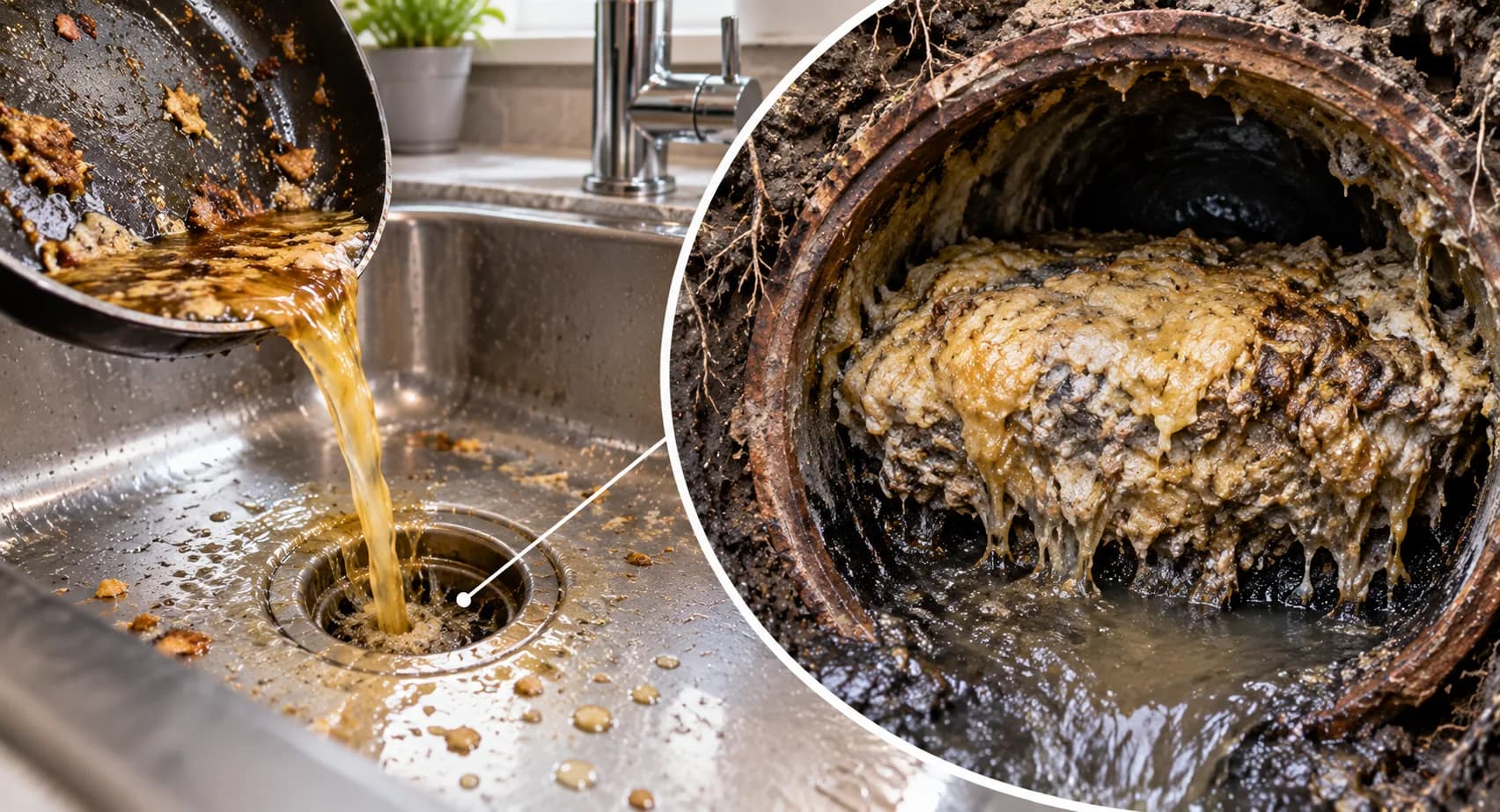
A fatberg is a solid lump of congealed fat, oil and grease (FOG) that has bound together with wet wipes, nappies, sanitary products and food waste inside a sewer. They grow slowly, pipe by pipe, from grease poured down kitchen sinks, and can end up hundreds of metres long. The same grease causes smaller blockages much closer to home, and it is one of the most common reasons people need blocked drain clearance from a kitchen sink or outside gully.
This guide explains what fatbergs are, the biggest found in the UK, how a kitchen sink starts one and what to do with cooking fat and oil instead.
What is a fatberg?
A fatberg is a hardened mass of fat, oil and grease combined with items that should never be flushed, which sticks to the inside of a sewer and restricts or stops the flow. Guinness World Records defines it as "an agglomeration of congealed fat, cooking oil, nappies, wet wipes and other personal hygiene products flushed down the toilet that causes a blockage in sewage systems".
Fat on its own would eventually wash through. The problem is the combination. Grease coats the pipe and acts as glue; wipes and sanitary products don't break down and give the grease something to cling to. Each layer catches more, and the lump grows until sewage backs up into streets, gardens and homes.
What are the biggest fatbergs found in the UK?
The biggest reported fatberg was found under Whitechapel in east London in September 2017. According to Guinness World Records, Thames Water inspectors reported it as 250 metres long, weighing an estimated 130 tonnes. A piece of it was put on show at the Museum of London in 2018, and the photo at the top of this guide shows a fatberg sample from that display.
| Fatberg | Year | Reported size | Source |
|---|---|---|---|
| Whitechapel, London | 2017 | 250 m long, about 130 tonnes | Guinness World Records, from Thames Water |
| Birchall Street, Liverpool | 2019 | 250 m long, 400 tonnes | United Utilities |
| Hodge Hill, Birmingham | 2021 | Over 1,000 m long, about 300 tonnes | Severn Trent |
The Liverpool fatberg shows how hard they are to shift. United Utilities said jetting with high-pressure water did not work, so crews had to dig it out by hand over around eight weeks at a cost of more than £100,000. Closer to us, Severn Trent, the sewerage company for Nottinghamshire, Derbyshire and most of Leicestershire, reported a fatberg in Hodge Hill, Birmingham, estimated at over 1,000 metres long and around 300 tonnes.
How big is the problem in the East Midlands?
Fatbergs are the headline cases, but everyday grease blockages are far more common. In one Christmas campaign, Severn Trent said it had cleared 28,782 blockages and 19 million litres of fats, oils and greases from its sewers in a single year, and named Derbyshire, Leicestershire and Nottinghamshire among its blockage hotspots. Nationally, United Utilities puts the water industry's annual spend on blockages at around £100 million.
How does kitchen grease turn into a fatberg?
Grease starts the process in your own pipes. Warm fat looks harmless going down the plughole, but it cools as it travels and sets on the pipe walls. The stages usually look like this:
- In the sink waste and trap: a thin greasy film forms and catches food scraps and coffee grounds.
- In the outside gully and your underground drain: the pipe cools the grease further. It thickens into a waxy crust and water starts to drain slowly.
- In the public sewer: grease from many homes and food businesses meets flushed wipes. The mix hardens into a fatberg.
Fat, oil and grease covers more than frying oil. Butter, meat juices, gravy, sauces, salad dressings, mayonnaise and dairy all behave the same way once they cool.
Do hot water and washing-up liquid stop grease setting?
No. Hot water and detergent only push grease further along the pipe, where it cools and sets anyway, often in the gully or underground drain where it is harder to reach. Use them for cleaning, not as a way of getting rid of fat.
The same applies to "biological" or enzyme drain products sold for homes: they may help keep a pipe fresh, but they are no substitute for keeping fat out of the sink.
What should you do with used cooking oil and fat?
Let it cool, collect it and put it in the bin, or recycle larger amounts of household oil. Never pour it down a sink, toilet or outside drain.
| Type of fat or oil | What to do with it |
|---|---|
| Small amounts of fat left in a pan | Let it set, wipe it out with kitchen roll and bin the paper |
| Roasting tin fat and meat juices | Pour into an old jar or tin, let it harden, then bin it |
| Deep-fat fryer or large pan of oil | Cool it, pour it back into its bottle and take it to a recycling centre that accepts cooking oil |
| Greasy plates and dishes | Scrape into the food waste caddy or bin before washing |
| Gravy, sauces and dressings | Bin leftovers rather than pouring them away |
| Cooking oil from a business | Use a registered waste carrier, not a household recycling centre |
In Nottinghamshire, the county council says there is a special container for household cooking oil at every recycling centre, where it is recycled to create green electricity. It does not accept cooking oil from commercial premises. Check your own council's rules if you live in Derbyshire, Leicestershire or Lincolnshire.
How can you keep your kitchen sink free of grease?
Small habits prevent most greasy blockages:
- Use a sink strainer to catch food scraps.
- Wipe pans and plates with kitchen roll before washing up or loading the dishwasher.
- Put coffee grounds and tea leaves in the bin or food caddy; they bind with grease.
- Clean the dishwasher filter regularly.
- Empty and rinse the sink trap every few months: put a bowl underneath, unscrew it by hand, clean it and refit it.
- Keep the outside gully grid clear of leaves so wastewater has a clear route.
Severn Trent's message is "be a binner, not a blocker". Wipes are half of every fatberg, so read our guide to what not to flush as well.
What are the signs grease is building up in your drain?
- The sink drains slowly or leaves a greasy ring.
- The plughole gurgles as it empties.
- Bad smells come from the sink or outside gully.
- A white, grey or waxy crust forms around the gully grid.
- The gully overflows when the washing machine or dishwasher empties.
Several of these together usually mean grease has built up beyond the trap. Our guide on why drains smell covers smells in more detail, and how to unblock a sink walks through safe DIY steps.
Should you use chemical drain cleaners on grease?
Use them sparingly and never mix them. Many drain cleaners are strongly alkaline or acidic, and combining products can cause violent reactions and dangerous fumes. Wear gloves and eye protection, follow the label, and tell any engineer what you have already used. Chemicals rarely shift a solid grease blockage further down the drain.
Who is responsible for grease blockages?
If grease blocks the drain serving only your home, inside your boundary, clearing it is your responsibility. If it is in a shared pipe or the public sewer, it is the water company's. Our guide to who is responsible for blocked drains explains the split.
Businesses carry extra legal risk. Section 111 of the Water Industry Act 1991 makes it an offence to put anything into a public sewer, or a drain connected to one, that is likely to interfere with the free flow of its contents. Restaurants and takeaways should read our guide to grease traps for commercial kitchens.
When to call a professional
Call a drainage engineer if the sink keeps blocking, grease has reached the outside gully, or the drain still smells after you have cleaned the trap. At that point the build-up is usually in pipework you can't reach. Rodding can punch a hole through grease, but it tends to come back; drain jetting scours the pipe walls clean.
Our blocked drain clearance starts from £120 + VAT, with no call-out fee and the price agreed before we start. We're open 7 days a week, 6am to 8pm, with emergency call-outs 365 days a year across Nottinghamshire, Derbyshire, Leicestershire and Lincolnshire. Book online or call 07300 600 950. If the blockage turns out to be in the public sewer, we'll tell you so you can report it to the water company instead.
Sources
- Guinness World Records: largest fatberg
- United Utilities: monster 250 metre fatberg found in Liverpool sewer
- Severn Trent: battling monster Birmingham fatberg
- Severn Trent: help SLEIGH fatbergs this Christmas
- Nottinghamshire County Council: cooking oil at recycling centres
- Water Industry Act 1991, section 111 (legislation.gov.uk)
Frequently Asked Questions
Cite this guide: “What Is a Fatberg? How Kitchen Grease Builds Sewer Blockages”, Urgent Drainage Solutions, 6 October 2026. https://urgentdrainagesolutions.co.uk/blog/fat-oil-grease-kitchen-sink-care

Need A Drainage Engineer?Book Online Today