
How to Unblock a Sink, Shower or Bath Drain
Written by the Urgent Drainage Solutions teamPublished Updated 7 min read
Quick answer
To unblock a sink, remove the plug and strainer, pull out any hair or food, then use a cup plunger with the overflow covered. If that fails, put a bowl underneath and unscrew the U-bend to clean it. Showers and baths usually block with hair, which a cheap plastic drain snake pulls out.
- Kitchen sinks mostly block with fat and food; bathroom basins, showers and baths mostly block with hair and soap.
- Always cover the overflow with a damp cloth when plunging, or the pressure escapes and nothing moves.
- Cleaning the U-bend by hand fixes most sink blockages that a plunger can't.
- Never mix drain products: bleach can react with acid-based cleaners and give off toxic gas.
- If several fittings drain slowly at once, the blockage is in the drain, not the sink.
To unblock a sink, clear the plughole of hair or food, then plunge it with the overflow covered. If the water still won't go, put a bowl underneath and unscrew the U-bend (the trap) to clean it out. Showers and baths block with hair and soap, which a plastic drain snake pulls straight out. If several sinks, the bath and the toilet are all slow at once, the problem is in the drain, and our blocked drain engineers can clear it.
Below are step-by-step methods for each fitting, what to do if you don't have a plunger, and a table to help you pick the right method first time.
What blocks sinks, showers and baths?
Different fittings block for different reasons. Kitchen sinks mostly block with fat, oil, grease and food scraps that set in the trap and pipe. Bathroom basins, showers and baths mostly block with hair bound together by soap, shampoo and toothpaste. Which? lists fats, oils and grease as the main culprits, along with coffee grounds, which clump and harden.
Every sink, basin, bath and shower has a trap that holds water to keep drain smells out. Approved Document H says traps should be removable or fitted with a cleaning eye so blockages can be cleared, which is why most can be unscrewed by hand.
Which method should you use for which blockage?
| Fitting and symptom | Most likely cause | Try first | Then try |
|---|---|---|---|
| Kitchen sink draining slowly | Grease and food in the trap | Hot water, then cup plunger | Clean the U-bend |
| Kitchen sink full of standing water | Solid grease or food in the trap or waste | Bail out, then plunge | Clean the U-bend, then rod the waste pipe |
| Bathroom basin slow | Hair and soap in the pop-up waste | Lift out the pop-up plug and clean it | Plunger, then clean the trap |
| Shower tray not draining | Hair under the waste cover | Remove the cover, pull out hair | Plastic drain snake |
| Bath slow to empty | Hair in the plughole or trap | Drain snake through the plughole | Clean the bath trap via the side panel |
| Dishwasher won't drain | Filter or hose blocked | Clean the filter, check the hose | Clear the sink trap it connects to |
| Sink gurgles when the washing machine empties | Shared waste partly blocked | Clean the trap | Check the outside gully |
| Every fitting slow, toilet bubbles | Blocked drain | Check the outside chamber | Drain rodding or jetting |
How do you unblock a sink with a plunger?
Use a flat cup plunger and seal the overflow. The overflow is the small hole near the top of the basin or sink. If you don't cover it, the pressure escapes through it and the plunger does nothing.
- Remove the plug, strainer or pop-up waste and pull out anything you can see.
- Leave, or add, enough water to cover the rubber cup.
- Push a damp cloth firmly into the overflow. On a double kitchen sink, put the plug in the other bowl and hold it down.
- Place the plunger over the plughole and pump firmly 15 to 20 times, then pull it away sharply.
- If the water drains, run the hot tap for a minute to flush the pipe.
Which? says "a few firm plunges are enough to dislodge minor blockages caused by food particles or grease".
How do you unblock a sink without a plunger?
Clean the U-bend by hand. This clears most sink blockages that a plunger can't, and costs nothing.
- Put a bowl or bucket under the trap and have old towels ready.
- Unscrew the plastic nuts on either side of the trap by hand. Which? suggests a spanner only for tight fittings.
- Tip the contents into the bucket and clean out the trap with an old toothbrush.
- Check the pipe going into the wall with your finger or a bent piece of plastic.
- Refit the trap, making sure the rubber washers are seated, then run the tap and check for drips.
Other no-plunger options: a plastic drain snake (the barbed strip sold in DIY shops) for hair, and hot water with washing-up liquid for fresh grease. An expert quoted by Which? says home remedies like bicarbonate of soda and vinegar may tackle the smell of a blocked drain but are "not strong enough to help with a drain that is really clogged".
How do you unblock a kitchen sink?
Treat it as a grease problem. Scrape out any food, bail out standing water, plunge with the second bowl sealed, then clean the U-bend. If the trap is clear but the sink still won't drain, the grease is further along the waste pipe or in the outside gully it discharges into. Lift the gully grate and scoop out what you can, as described in our guide to unblocking an outside drain.
If you have standing water, don't add chemical unblocker to it. You may need to put your hands in the water later, and a full sink can splash corrosive product back at you. For habits that stop grease returning, see our guide to fat, oil and grease in kitchen sinks.
How do you unblock a bathroom sink?
Start with the plug. Most basins have a pop-up waste that lifts or unscrews, and the underside is usually wrapped in hair and soap. Clean it, then plunge with the overflow covered. If the water is still slow, clean the trap under the basin. Toothpaste and soap scum build up slowly, so a basin that has been getting worse for weeks will usually need its trap cleaned.
How do you unblock a shower drain?
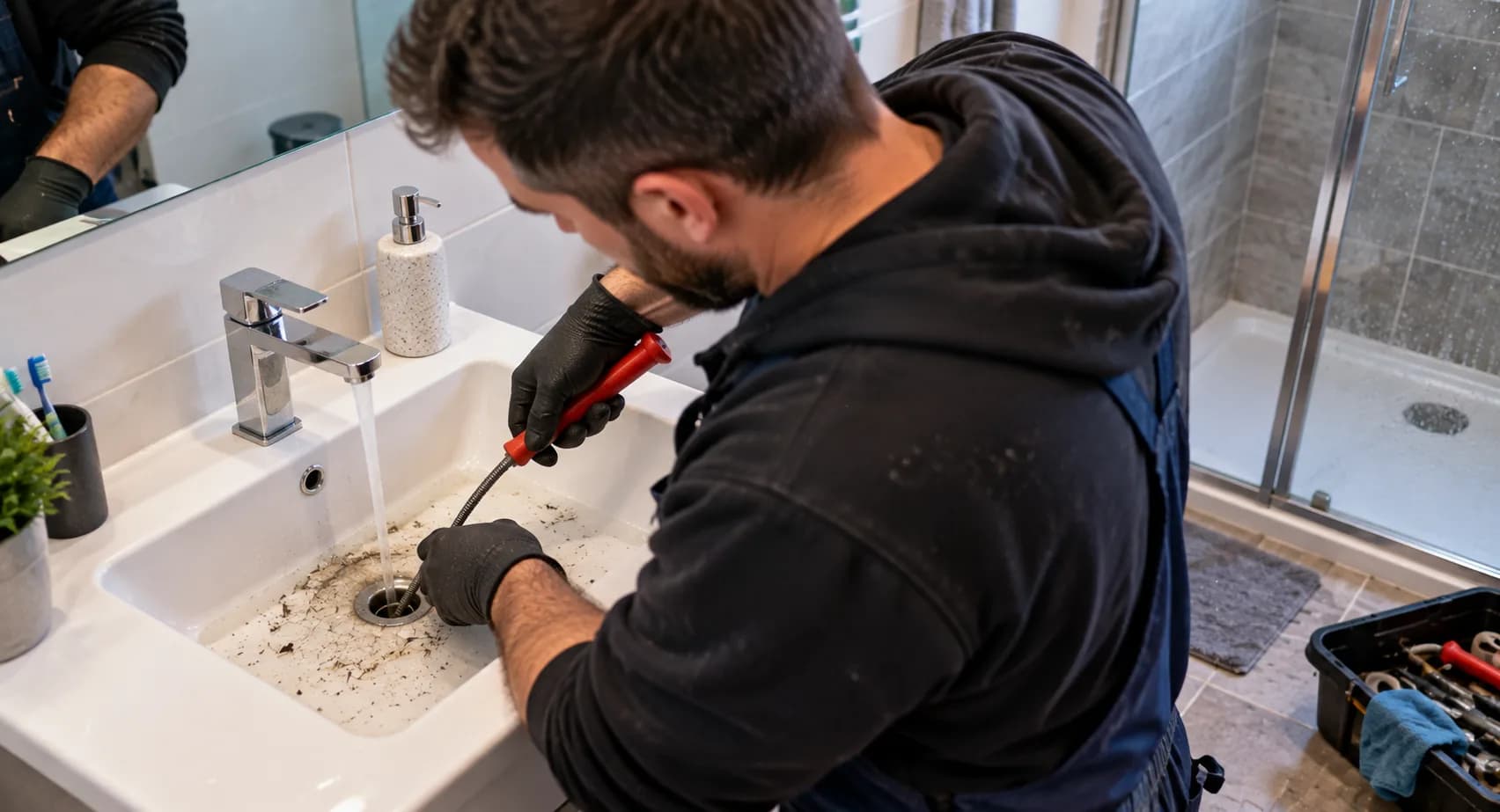
Remove the waste cover and pull out the hair. Most shower wastes have a cover that clicks or unscrews off, with a removable hair catcher or dip tube underneath. Wearing gloves, lift out the hair and sludge, clean the parts, then flush with hot water. If it is still slow, feed a plastic drain snake down and pull back. Shower trays sit low, so the trap is often only reachable from the top or through an access panel.
How do you unblock a bath drain?
Use a drain snake through the plughole first. Bath blockages are usually hair just below the plug. If that doesn't work, plunge with the overflow covered. If the bath panel comes off, you can reach the trap to clean it, but check whether your bath has a combined waste and overflow before unscrewing anything, and keep a bowl underneath.
How do you fix a dishwasher that won't drain?
Check the machine before the pipework. Clean the filter in the base of the dishwasher, check the drain hose isn't kinked or squashed behind the unit, and check where it connects to the sink waste or trap. If the kitchen sink also drains slowly, clear the sink first, because the dishwasher empties through the same pipe. Follow the manufacturer's manual and switch the machine off before working on it.
What should you never do when unblocking a sink?
- Don't mix products. Which? warns that bleach can react with acid-based products such as vinegar and limescale removers, risking toxic gas.
- Take care with caustic unblockers. The UK Health Security Agency notes that sodium hydroxide (caustic soda) is used in household drain cleaners and that stronger solutions can burn skin and eyes. Wear gloves and eye protection and follow the label.
- Don't pour boiling water into plastic waste pipes. Hot tap water is enough.
- Don't pour fat down the sink to "melt" a blockage. It sets again further down.
When is it the drain rather than the sink?
When more than one fitting is affected. If the kitchen sink, bath and toilet are all slow, water rises in the shower tray when the toilet is flushed, or an outside gully is overflowing, the blockage is in the drain that serves them all. Severn Trent says drains and sewers are only designed to carry human waste, wastewater and loo roll, and that blockages are most often caused by wet wipes, sanitary products and leftover cooking fats and oils. Our guide to the signs of a blocked or collapsed drain helps you tell the difference.
When to call a professional
Call a professional if cleaning the trap hasn't worked, if water is coming back up in another fitting, if more than one sink or shower is slow, or if the same sink blocks every few weeks. A blockage beyond the trap is usually cleared with rods or drain jetting, and waste pipes, traps and soil stacks inside the house are covered by our drainage plumbing service.
Our blocked drain service starts from £120 + VAT with no call-out fee, and we confirm a fixed price before any work starts. We cover Nottingham, Mansfield, Derby, Leicestershire and Lincolnshire, 7 days a week from 6am to 8pm. Call 07300 600 950 or book online.
Sources
Frequently Asked Questions
Cite this guide: “How to Unblock a Sink, Shower or Bath Drain”, Urgent Drainage Solutions, 6 October 2026. https://urgentdrainagesolutions.co.uk/blog/how-to-unblock-a-sink

Need A Drainage Engineer?Book Online Today