
How to Clean and Unblock a Shower Drain (and a Shower Tray)
Written by the Urgent Drainage Solutions teamPublished 10 min read
Quick answer
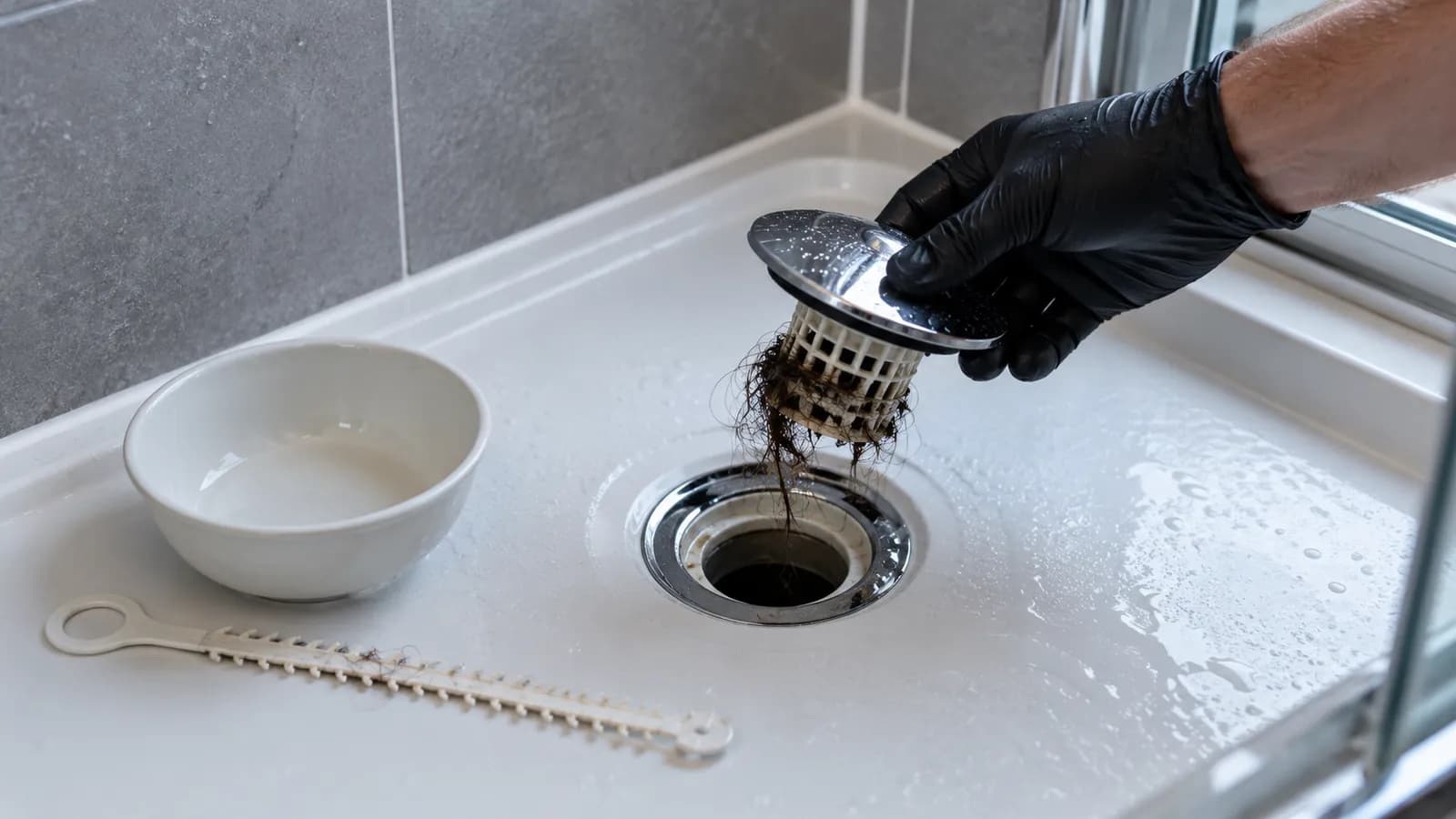
To unblock a shower drain, lift off the waste cover, pull out the hair catcher or trap insert, and clear the hair and soap sludge by hand while wearing gloves. Rinse the parts, refit them and run the shower. If it is still slow, use a plunger or a plastic drain snake to pull out hair further down.
- Most slow showers are caused by hair bound with soap just below the waste cover, within reach of your fingers.
- Most modern shower wastes have a removable cover and trap insert so you can clean them from above.
- A plastic drain snake usually beats bicarbonate and vinegar: Which? found the fizzing mixture didn't remove a hairball in any of its attempts.
- Mira advises against using drain unblockers and caustic soda on its acrylic shower trays and wastes.
- If the shower backs up when the toilet flushes or other fittings are slow too, the blockage is in the shared drain.
To unblock a shower drain, lift off the waste cover, take out the hair catcher or trap insert, and pull out the hair and soap sludge with gloved fingers. Rinse everything, refit it and run the water. If the tray still won't empty, use a plunger or a plastic drain snake to reach hair further down the waste pipe. If the shower and other fittings are all slow, the problem is in the drain, and our blocked drain engineers can clear it.
Below is how to open the different types of shower trap, how to clean a shower drain routinely, a table matching methods to symptoms, and the products to keep away from your tray. For basins, baths and kitchen sinks, see our guide on how to unblock a sink.
Why do shower drains block?
Shower drains block because hair binds with soap, shampoo and conditioner into a mat just under the waste cover. Which? lists hair, soap scum and non-biodegradable materials as the usual causes of blocked bathroom drains.
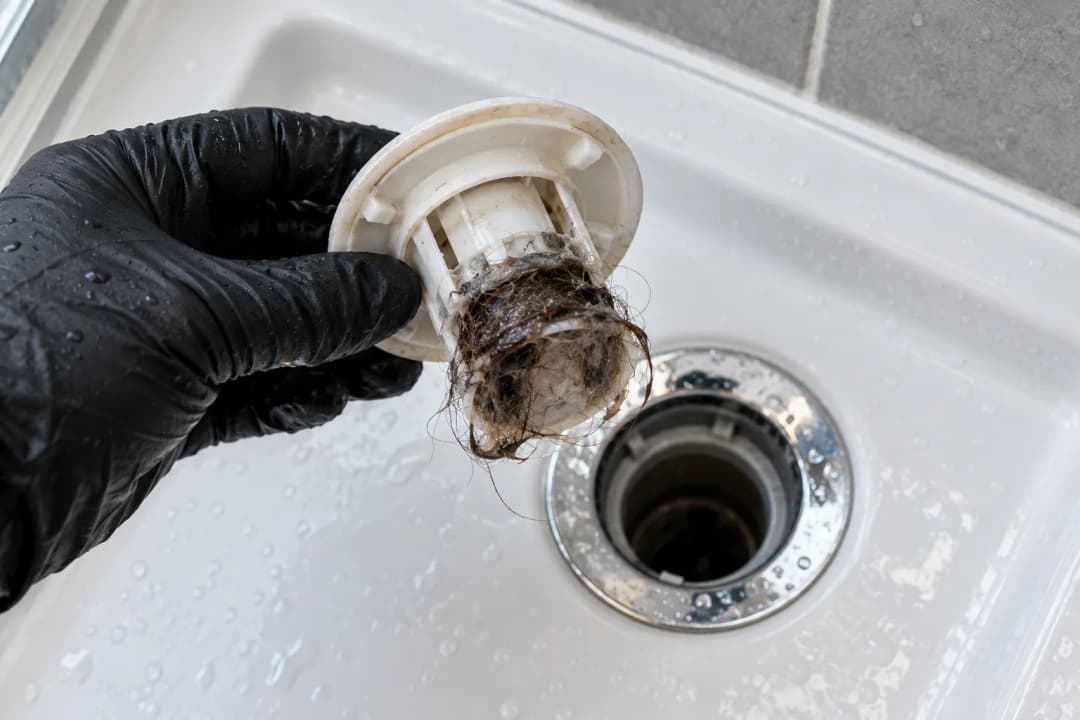
Every shower has a trap that holds water to stop drain smells coming into the room. Approved Document H gives a 40mm trap with a 50mm water seal for a shower. It also says traps should be removable or fitted with a cleaning eye so that blockages can be cleared. That is why most shower wastes can be opened from above without tools. Shower water moves slowly over a flat tray, so hair has little force behind it and collects in the trap rather than being washed through.
Which method should you use for which shower blockage?
Start with the method that matches the symptom. Most slow showers are fixed at step one, by cleaning the trap.
| Symptom | Most likely cause | Try first | Then try |
|---|---|---|---|
| Water drains slowly, hair visible on the cover | Hair on the hair catcher | Lift the cover and clean it | Clean the trap insert |
| Tray fills during a shower, empties afterwards | Hair and soap mat in the trap | Remove and clean the trap insert | Plastic drain snake |
| Tray stays full after the trap is cleaned | Hair further down the waste pipe | Plunger with the cover off | Drain snake or a hand drain auger |
| Linear wet-room channel slow | Hair in the channel trap | Lift the grate and trap, clean both | Drain snake through the outlet |
| Shower smells but drains fine | Dirty trap or dried-out water seal | Clean the trap, run the water | Check the trap parts are refitted properly |
| Gurgling from the shower when the basin or bath empties | Shared waste pipe partly blocked | Clean the traps on both fittings | Professional check of the waste and stack |
| Water rises in the shower when the toilet flushes | Blocked drain or soil stack | Stop using water, check the outside chamber | Drain rodding or jetting |
How do you remove and clean a shower trap?
Lift off the cover, pull out the insert, clean it under the tap and push it back in. The details depend on the type of waste you have.
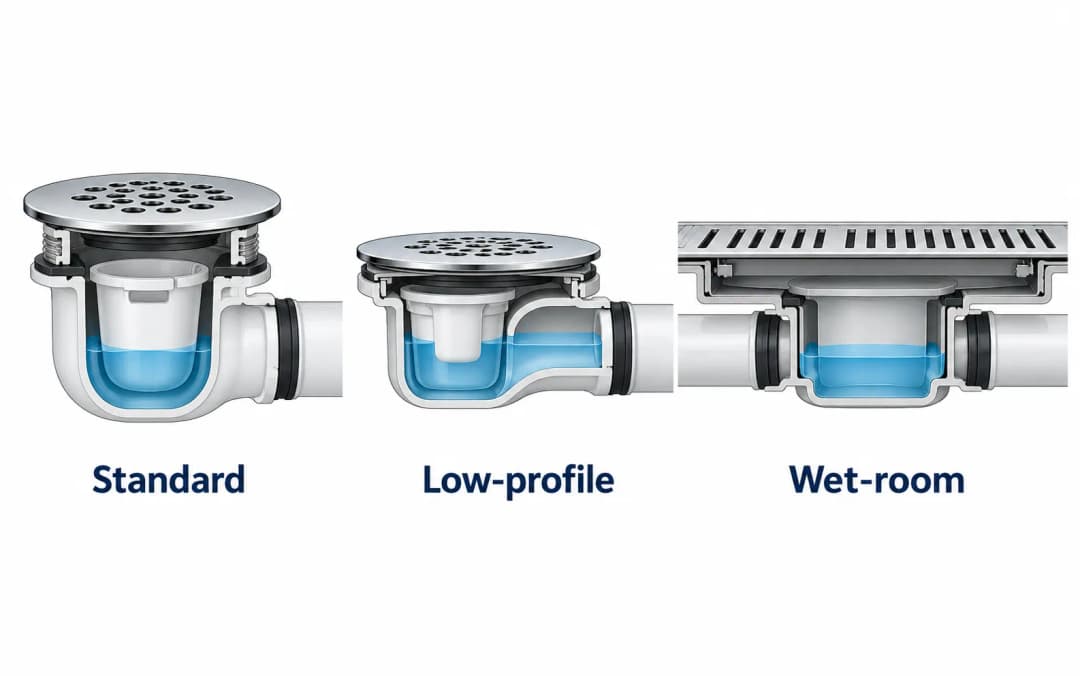
- Standard shower tray waste with a dip tube or cup. The chrome or plastic cover either clicks off or is held by a central screw. Underneath is a removable cup, dip tube or "trap insert" that forms the water seal. Pull it straight up, sometimes with a slight twist, and clean it. Mira says the waste cover and trap section on its Flight Level trays can be removed for cleaning, and that the cover's built-in hair catcher should be cleaned regularly to avoid blockages.
- Low-profile and slimline trays. These sit close to the floor, so the trap is shallow and there is usually no access from below. Everything is done from the top. Shallow traps fill with hair more quickly, so clean them more often.
- Wet-room and linear drains. Lift the grate with a finger, a flat tool or the hook supplied with the drain, then lift out the trap unit. The unidrain cleaning instructions explain that its trap can be stuck with dirt and debris and may need its catch pulled to free it. They also warn that a trap not reassembled correctly can cause odours or stop water flowing freely.
- Older traps with no removable insert. Some older trays have a fixed trap under the floor or behind a bath panel. You can only clear these from above with a snake, or by removing the tray panel if there is one.
Step by step
- Turn off the shower and put on rubber gloves.
- Remove the cover. If there is a screw, put a cloth over the plughole first so it can't drop in.
- Pull out the hair catcher and trap insert. Note which way round they came out, or take a photo.
- Pull the hair off by hand and drop it in the bin, not down the toilet.
- Scrub the parts with an old toothbrush and warm soapy water, and wipe out the inside of the waste body.
- Refit the insert and check any rubber seal is seated, then refit the cover.
- Run the shower for a minute to refill the trap and check the water drains.
How do you clean a shower drain routinely?
Pull the hair off the catcher every week or two and clean the trap insert every couple of months. That small habit stops most blockages before they start. unidrain recommends cleaning its wet-room trap about every 6 to 8 weeks, and says the right frequency depends on how often the shower is used and how much hair goes into the drain.
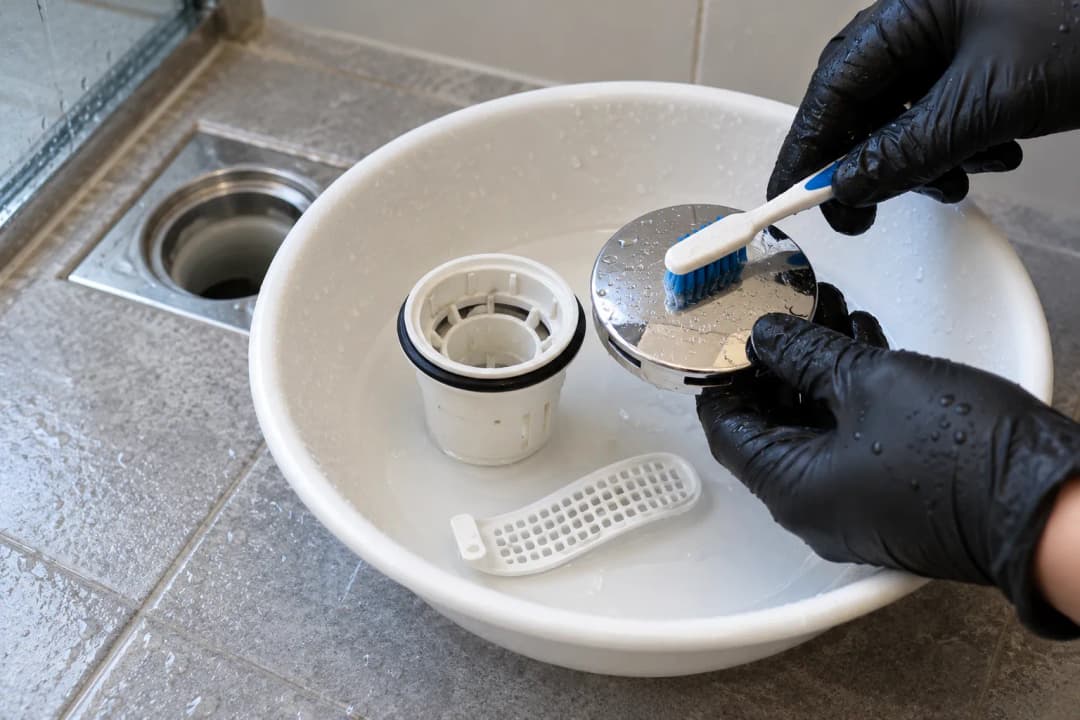
Use warm water and mild soap. Mira recommends hot soapy water and a soft brush for its trays, and advises against grout and tile cleaners, scale removers, abrasive scourers and drain unblockers, which it says can damage the tray and the shower waste. After each shower, rinse the tray until clear water runs through the waste, so soapy water doesn't sit in the trap.
How do you unblock a shower drain with a plunger?
Remove the cover and hair catcher, leave enough water in the tray to cover the plunger cup, and pump firmly 15 to 20 times. A flat cup plunger (the sink type, not the flanged toilet type) seals best against a flat shower tray. If your bathroom basin or bath shares the same waste pipe, block its plughole with a wet cloth so the pressure isn't lost through it.
Plunging pushes the blockage further along the pipe. That works for soft soap and small hair clumps, but a dense hair mat is better pulled out than pushed in. If plunging doesn't help after two or three attempts, use a drain snake.
How do you use a drain snake on a shower?
Feed the snake into the waste, twist it, and pull it back slowly. The barbs catch the hair. A plastic drain snake (a flexible strip with barbs, sold cheaply in DIY shops) is the most useful tool for shower blockages. Which? quotes a drainage expert who describes a hair snare or drain snake as "a handy way to get hair out of bathroom drains".
- Remove the cover and trap insert so the snake goes straight into the pipe.
- Push the snake in as far as it will go without forcing it.
- Twist it a few times, then pull it out slowly over a bin bag.
- Repeat until it comes back clean, then flush with hot tap water.
A metal hand drain auger reaches further, but take care with plastic waste pipes and the tight bends under shower trays. Don't use a straightened coat hanger. It can scratch the waste and is more likely to push hair in than pull it out.
Do bicarbonate of soda and vinegar unblock a shower drain?
Not reliably. Which? tested the mixture and found that although it fizzed in the plughole, it was not enough "in any of our attempts to remove a hairball". An expert quoted in the same article says home remedies "may tackle some of the smell of a blocked drain" but are not strong enough for a drain that is really clogged.
Bicarbonate and vinegar won't harm the drain, and they can freshen a smelly trap. Don't rely on them for a shower that is holding water. Lift out the trap or use a snake instead.
Are chemical drain unblockers safe in a shower?
Use them with caution, and check your tray maker's advice first. Mira, for example, says it does not recommend drain unblockers on its trays and that the acrylic surface should not come into contact with caustic soda. The UK Health Security Agency notes that sodium hydroxide (caustic soda) is used in drain cleaners and that stronger solutions can burn skin and eyes.
If you do use one:
- Follow the label exactly, and wear gloves and eye protection.
- Never mix products. Which? warns that bleach can react with acid-based cleaners such as limescale removers and vinegar and release toxic gas. Our guide on whether bleach unblocks drains explains why.
- Never pour it into a tray full of standing water. You may need to put your hands in that water later.
- Tell anyone who comes to clear the drain what you have used.
Which? did find that some unblockers designed for hair and soap scum broke down hairballs in its tests. Even so, lifting out the trap is cheaper and safer, and it leaves nothing corrosive in the pipe.
Why does a shower drain smell?
Usually because the trap is dirty or its water seal has dried out. Hair and soap in the trap rot and smell, and a shower that isn't used for a few weeks can lose enough water through evaporation to let drain air into the room. Approved Document H explains that the trap's water seal is what stops foul air from the drainage system entering the building.
Clean the trap insert, then run the shower for a minute to refill it. In a spare bathroom, run the shower every week or two. If the smell comes back straight away, check that the trap parts have been refitted correctly, because a missing or misaligned insert leaves no seal at all. For smells that aren't coming from the shower itself, see why your drains smell.
When is it the shared waste or soil stack, not the shower?
When more than one fitting is affected. Approved Document H says branch pipes from showers, baths and basins discharge into another branch pipe or a discharge stack (the soil stack), unless they run to a gully outside. A blockage at the point where those pipes join affects every fitting upstream.
Signs that the blockage is beyond your shower:
- The shower gurgles or rises when the bath, basin or washing machine empties.
- Dirty water comes up in the tray when the toilet is flushed.
- The toilet, bath and basins are all slow.
- An outside gully or inspection chamber is full or overflowing.
Stop running water if dirty water is coming up in the shower. Pipes that serve only your home are usually your responsibility, or your landlord's if you rent; our guide on who is responsible for blocked drains explains where that ends and the water company's sewer begins. Our guide to the signs of a blocked or collapsed drain helps you work out where the problem is.
How do you stop a shower drain blocking again?
Catch the hair before it reaches the trap. Fit a hair catcher or mesh strainer if your waste doesn't have one, and empty it after each shower.
- Brush long hair before showering, as Which? suggests, so less of it ends up in the tray.
- Pull the hair off the waste cover every week or two.
- Clean the trap insert every couple of months.
- Rinse the tray with clear water after each shower.
- Don't rinse paint, grout, plaster or pet bedding down the shower.
- Bin hair from the catcher. Don't flush it down the toilet.
When to call a professional
Call a professional if you have cleaned the trap and used a snake but the shower still won't drain, if water comes up in the shower when the toilet flushes, if more than one fitting is slow, or if the shower blocks again within a week or two. A blockage in the waste pipe under the floor or in the soil stack needs proper rods or a jetter, and the right access.
Our blocked drain service starts from £120 + VAT with no call-out fee, and we confirm a fixed price before any work starts. Waste pipes, traps and soil stacks inside the house are covered by our drainage plumbing service. We cover Nottingham and the East Midlands, 7 days a week from 6am to 8pm, with emergency call-outs 365 days a year. Call 07300 600 950 or book online.
Sources
Frequently Asked Questions
Cite this guide: “How to Clean and Unblock a Shower Drain (and a Shower Tray)”, Urgent Drainage Solutions, 16 October 2026. https://urgentdrainagesolutions.co.uk/blog/how-to-unblock-a-shower-drain

Need A Drainage Engineer?Book Online Today