
Blocked Soakaway: Signs, Causes and How to Fix It
Written by the Urgent Drainage Solutions teamPublished 7 min read
Quick answer
A blocked soakaway shows itself as gullies or downpipes backing up in rain and water pooling over the soakaway. Silt, leaves and fine soil are the usual cause. First rule out a blocked pipe, then test how fast the soakaway drains. Jetting can clear the inlet and silt trap, but a silted rubble pit usually needs rebuilding.
- A blocked pipe between the house and the soakaway causes the same symptoms, so rule it out before blaming the soakaway.
- Silt and leaves washed in from roofs and paving are the most common cause, especially where there is no silt trap.
- Jetting clears inlet pipes, silt traps and chambers with access, but cannot clean silt out of a rubble-filled pit.
- If the ground itself will not drain, Approved Document H's next options are a watercourse or, failing that, a sewer.
- MyJobQuote's October 2026 guide puts soakaway jetting at £100 to £400 and replacement at £660 to £1,200.
A blocked soakaway is one that can no longer take water away as fast as it arrives, so rain backs up through gullies and downpipes or pools on the ground above it. The usual cause is silt, leaves and fine soil washed in from roofs and paving, but a blocked pipe, clay ground or a high water table can look exactly the same. Our soakaway service diagnoses the cause first, then clears, rebuilds or replaces the soakaway as needed.
This guide explains the signs, the causes, how to test what is wrong and which fixes work for which problem. For the basics of how soakaways are built, see what a soakaway is.
What are the signs of a blocked soakaway?
The clearest sign is water appearing where it should be draining away during rain. Look for:
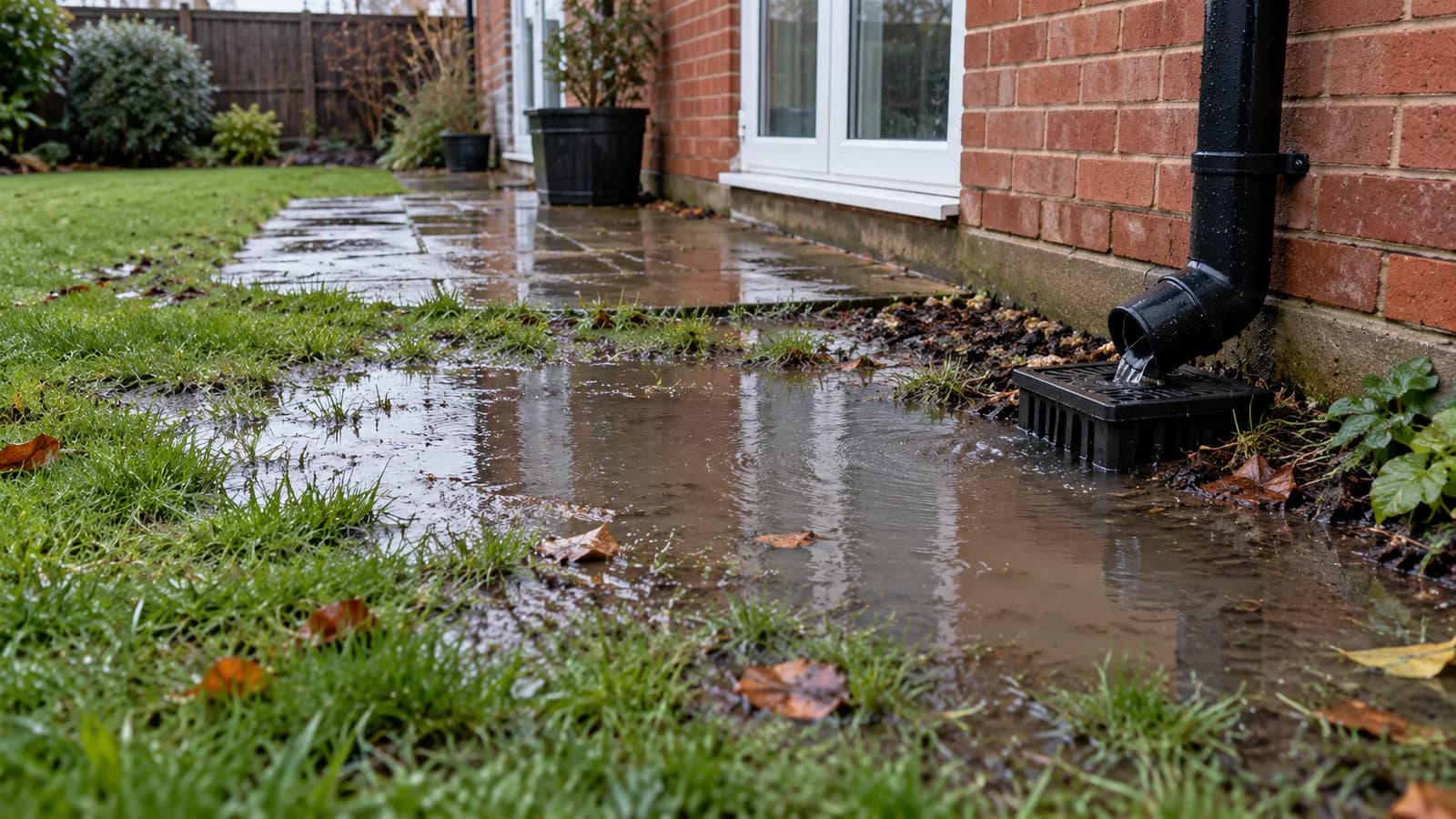
- gullies overflowing or downpipe shoes spilling over during or after heavy rain;
- standing water or a boggy patch on the lawn above or near the soakaway;
- downpipes gurgling or leaking at their joints when it rains hard;
- a silt trap or inspection chamber that is still full of water a day after rain;
- problems that get worse after a wet spell, when the ground is already saturated.
One sign on its own can have other causes. Water spilling from the top of a downpipe usually means the downpipe or gutter is blocked, which our guide to a blocked downpipe covers.
Is it the soakaway or the pipe feeding it?
Rule out the pipe first, because a blocked or broken pipe between the house and the soakaway causes the same symptoms. If the gully nearest the house overflows but the soakaway area is dry, the blockage is likely in the pipe. If the ground over the soakaway is waterlogged and any chamber on it stays full, the soakaway itself is the problem.
Pipes leading to soakaways block with the same things as other surface water drains: leaves, silt, moss from the roof and, over time, tree roots through joints. A camera survey shows whether the pipe is blocked, cracked or collapsed, and our guide to tree roots in drains explains why roots favour leaking joints.
What causes a soakaway to block?
Most soakaways fail gradually as fine material coats the surfaces water should drain through. The common causes are:
- Silt and grit washed off paving and driveways, which settle in the base and sides.
- Leaves and moss from gutters, which rot down into fine sludge.
- No silt trap or catchpit, so everything in the rainwater reaches the soakaway.
- Clay ground, which may never have drained well enough for the soakaway's size.
- A high water table, which leaves the base sitting in groundwater in winter. Approved Document H says infiltration devices should not be built where the water table reaches the bottom at any time of year.
- Undersizing, often after an extension or new drive was connected to an old soakaway.
- Collapse of an old rubble pit, where the fill settles and soil falls in.
- Roots growing into the pit or the pipe in search of water.
- A torn or missing geotextile wrap, which lets surrounding soil wash into crates.
How do you diagnose a blocked soakaway?
Diagnose in three steps: watch it in rain, look inside if you can, and survey the pipe. Each step narrows down whether the fault is the pipe, the soakaway or the ground.
- Do a rain test. In steady rain, or with a hose run into the nearest gully, watch where water first backs up. Note how long any standing water takes to clear afterwards.
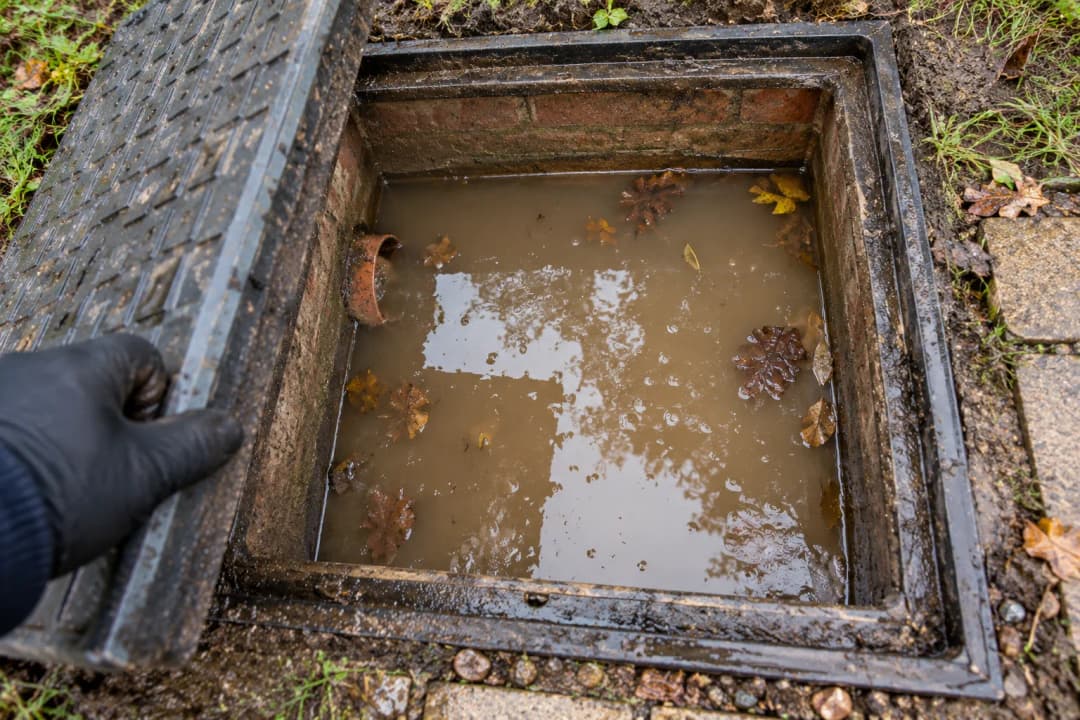
- Lift the chamber. If there is a silt trap, catchpit or inspection chamber, lift the cover and look. Silt and leaves in a trap point to a cleaning job; clean water that sits for a day or more points to the soakaway or the ground.
- Run a camera through the pipe. A CCTV survey shows blockages, roots, cracks and collapses between the house and the soakaway. Our guide to CCTV drain survey costs explains what a survey involves.
- Retest the ground if needed. If the pipe and trap are clear but the soakaway still stays full, a fresh BRE 365 trial pit nearby shows whether the ground itself drains.
A word of caution: do not climb into an excavation or chamber, and keep children and pets away from open covers.
Which fix matches your soakaway problem?
Match the fix to the cause. The table below sums up how we approach each symptom; it is general trade practice rather than a rule.
| Symptom | Likely cause | Fix |
|---|---|---|
| Gully near the house overflows, soakaway area dry | Blocked or broken pipe | Jet the pipe, CCTV survey, repair if broken |
| Silt trap full of leaves and sludge | Trap not emptied | Empty and jet the trap, clean gutters |
| Chamber holds clean water for days | Soakaway sides and base silted | Jet a crate or chamber system; rebuild a rubble pit |
| Problems began after an extension or drive | Soakaway now too small | Add capacity sized from a new test |
| Fine in summer, floods every winter | High winter water table | Relocate, use a shallower design, or an alternative outlet |
| Ground over the pit has sunk | Rubble pit collapsed | Excavate and replace, usually with crates |
| Trial pit barely drains | Clay or impermeable ground | Attenuation and a controlled outlet, not a soakaway |
Can a blocked soakaway be unblocked?
Often the parts around it can be, but not always the soakaway itself. High-pressure jetting clears inlet pipes, silt traps, catchpits and chambers with an access point, and can flush silt from crate systems designed with inspection channels. MyJobQuote's guide, updated 6 October 2026, puts soakaway jetting at £100 to £400. Our guide to drain jetting explains how it works.
A rubble-filled soakaway is different. Silt lodged between the stones cannot be jetted out, and pushing water in only fills it faster. Once a rubble pit has silted, cleaning the inlet buys time at best. Chemicals and enzyme products do nothing for silt or clay.
When does a soakaway need rebuilding or replacing?
A soakaway needs rebuilding when cleaning cannot restore its capacity: a silted or collapsed rubble pit, a torn geotextile wrap that has let soil into crates, or a soakaway that was never big enough. MyJobQuote gives £660 to £1,200 to replace most domestic soakaways if jetting does not fix the problem.
A replacement should be designed, not just dug in the same hole. That means a new BRE 365 test, sizing for the full area now draining to it, a position at least 5 m from buildings and roads under Approved Document H, and a silt trap on the inlet. A new soakaway is usually built from geotextile-wrapped crates, which store about three times as much water as rubble for the same size of hole. Our guide to soakaway crates covers sizing and installation.
What if the ground will not take the water?
Then a soakaway is the wrong answer, however large you make it. Approved Document H (requirement H3) sets an order of priority for rainwater: an adequate soakaway or other infiltration system first; where that is not reasonably practicable, a watercourse; and only then a sewer.
A connection to a public sewer needs the water company's agreement. Under Section 106 of the Water Industry Act 1991 you must give the sewerage undertaker notice of your proposal, and it may refuse within 21 days if the connection does not meet its standards or would harm its system. Ask your water company what evidence it needs before applying; a percolation test result is the obvious starting point. Where the sewer cannot take full flows, a sealed attenuation tank that holds water and releases it slowly is a common solution. Never connect rainwater to a foul-only drain without consent.
How do you stop a soakaway blocking again?
Stop debris reaching it. The measures that make most difference are simple:
- fit a silt trap or catchpit on the inlet and empty it regularly (Drainfast's installation guide says its mesh bucket needs periodic emptying);
- clean gutters and gully grates, especially after leaf fall;
- keep soil, sand and cement washings out of drains during building or landscaping work;
- keep trees and large shrubs away from the soakaway and its pipe;
- avoid driving or parking over a soakaway not built for vehicle loads;
- check the soakaway again whenever you add roof or paved area to it.
When to call a professional
Call a drainage contractor if gullies overflow in ordinary rain, a chamber stays full for more than a day, the ground over the soakaway has sunk, or the problem keeps coming back after cleaning. These usually need a camera survey, jetting or a new soakaway sized from a proper test. If the fault is a blocked pipe or gully, our drain unblocking starts from £120 + VAT. Rebuilds and new soakaways are quoted after a site visit and percolation test through our soakaway service, and if the ground will not drain we will say so and explain the alternatives.
We cover Nottinghamshire, Derbyshire, Leicestershire and Lincolnshire, with no call-out fee. Get a quote or call 07300 600 950.
Sources
- Approved Document H: Drainage and waste disposal (gov.uk)
- BRE Digest 365: Soakaway design (2016)
- Water Industry Act 1991, section 106 (legislation.gov.uk)
- MyJobQuote: Soakaway installation cost guide (6 October 2026)
- Drainfast: Soakaway systems installation guide
- CNC Building Control: How to calculate the size of a soakaway
Frequently Asked Questions
Cite this guide: “Blocked Soakaway: Signs, Causes and How to Fix It”, Urgent Drainage Solutions, 16 October 2026. https://urgentdrainagesolutions.co.uk/blog/blocked-soakaway

Need A Drainage Engineer?Book Online Today