
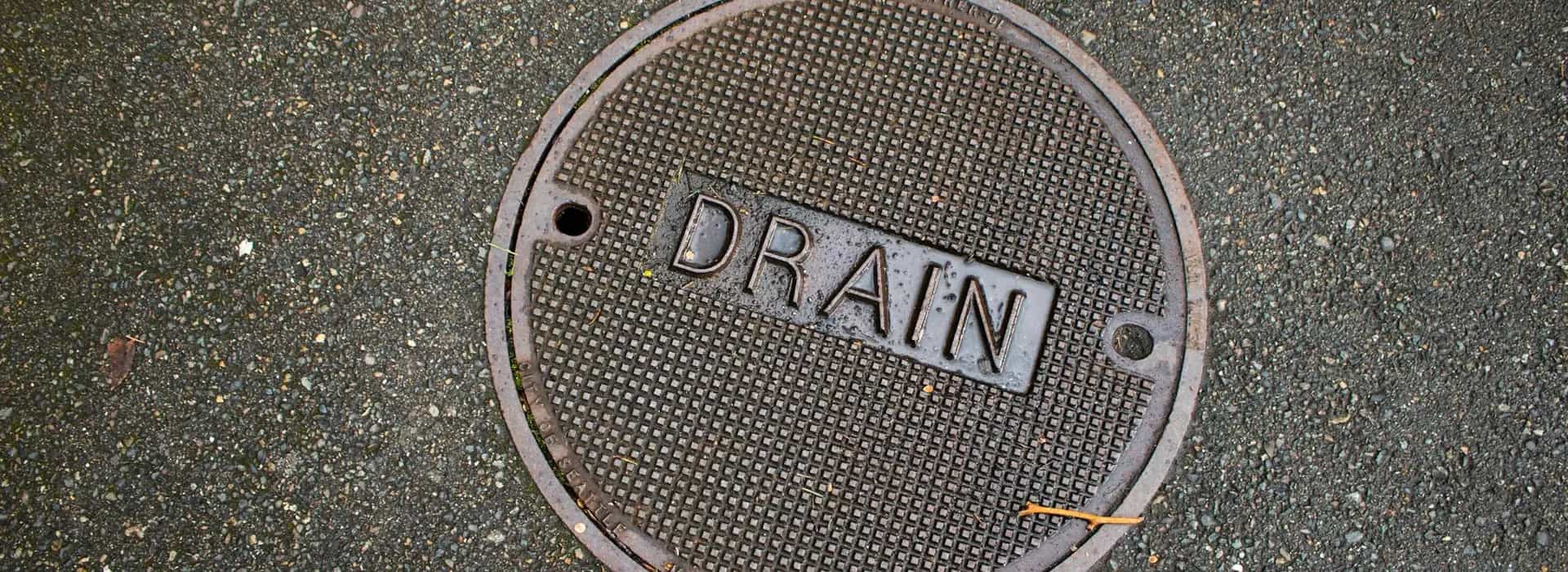
Manhole Cover Sizes and Load Classes: A15 to F900 Explained
Written by the Urgent Drainage Solutions teamPublished 9 min read
Checked by Eren Birinci (Gino), Founder & Lead Drainage Engineer on
Quick answer
A manhole cover is sold by its clear opening, the size of the hole it covers, not the outside of the frame. Measure the chamber opening wall to wall in millimetres, then pick a BS EN 124 load class: A15 for foot traffic only, B125 for driveways, C250 for yards and D400 for roads.
- Manhole covers are listed by clear opening, so a cover sold as 450 mm can measure 555 mm across the outside of its frame.
- Common UK clear openings run from 300 x 300 mm to 1200 x 1200 mm for square and rectangular covers, and 450 mm or 600 mm for round ones.
- BS EN 124 grades covers from A15 (15 kN test load) to F900 (900 kN); the number in the class name is the test load in kilonewtons.
- A domestic driveway normally needs B125; A15 is only for places vehicles cannot reach.
- Approved Document H says chambers inside a building need mechanically fixed airtight covers, which is where double-sealed covers are used.
A manhole cover is chosen by two things: its size and its load class. The size that matters is the clear opening, the hole the cover sits over, and the class is the BS EN 124 grade, from A15 for foot traffic to F900 for airports. Get either wrong and the cover rocks, cracks or will not fit. If yours has already failed, our drain repairs team replaces covers and frames on private drains, from £250 + VAT.
This guide covers measuring, the common UK sizes, every load class with where it belongs, the materials on offer and when a cover has to be sealed or locked. For who is responsible for a broken cover, see our guide to manhole cover replacement.
How do you measure a manhole cover?
Measure the hole, not the lid. Merchant JDP puts it plainly: manhole covers are "manufactured and sold by their clear opening size". The overall size of the frame is always bigger, so measuring across the old cover gives you the wrong number.
- Check for markings. A cover made to BS EN 124 is designated by its load class and clear opening, so the figures you need may be cast or stamped into the lid or frame.
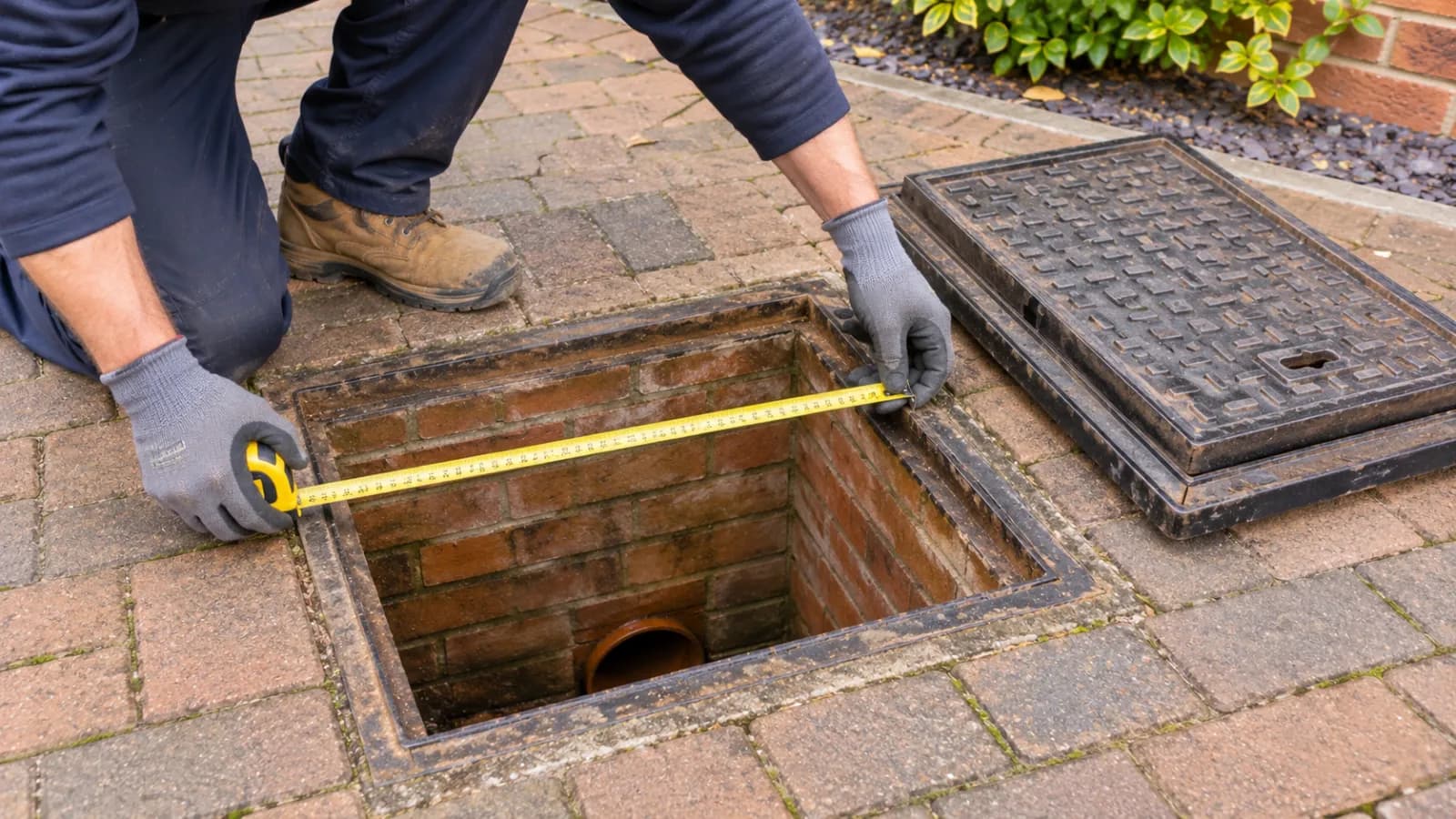
- Lift the cover and measure the opening. Measure from inside wall to inside wall of the chamber, in millimetres. Take width and length for a square or rectangular opening, and the diameter for a round one.
- Measure the overall frame. You need the outside dimensions as well when replacing an existing cover, because the new frame has to sit in the space the old one leaves.
- Measure the frame depth. This is the depth of the brickwork, paving or asphalt the frame sits in. A deeper frame than the old one means cutting out more of the surface.
- Note what is underneath. A round plastic inspection chamber needs a cover and frame made to fit that diameter, and often that brand.
JDP's example shows the gap between the two measurements: a B125 round cover that measures 555 mm across the frame is listed as 450 mm, because it fits a 450 mm opening.
Two rules follow from this. The clear opening of the new frame must be at least equal to the chamber opening, so the frame is supported on the chamber walls. And bigger is not automatically safe: JDP notes that an oversized cover can foul the chamber if the reinforcing under the lid clashes with it.
What is the clear opening of a manhole cover?
The clear opening is the usable hole through the frame once the lid is off. BS EN 124 defines it as "the largest circular area that can be inscribed within the frame opening", as quoted by manufacturer Wrekin. Hinges, lugs and seatings must not project into that space.
It matters most where a person has to get in. On motorways and trunk roads, the highway standard CD 534 asks for a clear opening of at least 600 mm on a rectangular frame, according to Wrekin's summary. At a house, the chambers are worked from the surface and are much smaller, so the clear opening simply has to match the chamber. Our guide to inspection chambers and manholes explains the chamber sizes in Approved Document H.
What are the common UK manhole cover sizes?
Square and rectangular covers typically run from 300 x 300 mm to 1200 x 1200 mm clear opening, and round covers are usually 450 mm or 600 mm in diameter. Those ranges come from the sizing guides published by JDP and Drainfast.
| Clear opening (mm) | Shape | Where you usually find it |
|---|---|---|
| 300 x 300 | Square | Small access points and shallow chambers |
| 450 diameter | Round | Plastic inspection chambers at newer houses |
| 450 x 450 | Square | Small brick chambers; square-to-round covers over plastic chambers |
| 600 x 450 | Rectangular | The typical brick inspection chamber at an older house |
| 600 x 600 | Square | Larger chambers, driveways and commercial yards |
| 600 diameter | Round | Larger round chambers |
| 900 x 600 and above | Rectangular | Deep manholes, usually commercial or adopted sewers |
The sizes are from Drainfast's list of standard clear openings (updated July 2026). The "where you find it" column is general trade experience, not a rule, so always measure.
Sizes are common, not universal. Frames differ from one maker to the next, which is why a new lid rarely drops neatly into an old frame. JDP recommends replacing the cover and frame together, since a frame that has carried a broken lid is likely to be damaged too.
What do the manhole cover load classes mean?
The class tells you the load the cover and frame were tested to. BS EN 124 sets six classes, and the number in each name is the test load in kilonewtons. JDP's guide to the standard gives each class, its test load and the areas it is meant for.
| Class | Test load | Group | Where it is used |
|---|---|---|---|
| A15 | 15 kN (1.5 tonnes) | 1 | Areas only pedestrians can reach: lawns, paths, patios |
| B125 | 125 kN (12.5 tonnes) | 2 | Driveways, car parks and pedestrian areas with occasional vehicles |
| C250 | 250 kN (25 tonnes) | 3 | Forecourts, industrial sites and other slow-moving traffic areas |
| D400 | 400 kN (40 tonnes) | 4 | Carriageways, hard shoulders and parking areas |
| E600 | 600 kN (60 tonnes) | 5 | High wheel loads, such as loading areas and docks |
| F900 | 900 kN (90 tonnes) | 6 | Very high wheel loads, such as aircraft pavements |
Three points stop most mistakes:
- The class covers the lid and the frame together. A D400 lid in a light frame is only as strong as the frame and its bedding.
- Think about the heaviest thing that will ever cross it. JDP's advice is to allow for caravans, motorhomes and delivery vehicles, and its golden rule is "if in doubt, always go for the higher rating".
- A15 is not for driveways. A pedestrian cover that ends up under a car wheel is a common reason for a cracked lid.
Approved Document H, the Building Regulations guidance for drainage in England, does not name a class. It says covers should be removable, non-ventilating, of durable material and "of suitable strength" (paragraph 2.54), and BS EN 124 is how suitable strength is shown.
Which class do you need: B125, C250 or D400?
For most homes the answer is B125 on anything a vehicle can reach, and A15 elsewhere.
- B125 manhole cover. The usual choice for a domestic driveway, a garage entrance or a small car park.
- C250 manhole cover. For yards and forecourts where vans and lorries move slowly, such as a farm entrance, a shop delivery area or a small industrial unit.
- D400 manhole cover. The road class. At a private property it is only needed where heavy goods vehicles drive regularly. A cover in the public road is the water company's, the council's or a utility's, and not yours to replace.
If a garden path or patio might become part of a drive later, fit B125 now. It saves lifting and rebedding the frame a second time.
What is a heavy duty manhole cover?
"Heavy duty" is a sales term, not a class. Merchants use it for anything from a steel driveway cover rated in tonnes to a D400 ductile iron road cover, so ignore the label and look for the class or the tonne rating.
Fabricated steel covers are often rated differently. JDP explains that steel access covers usually carry a FACTA class, which runs from A (pedestrian) to F, instead of a BS EN 124 class, and that steel covers "can't be used in heavy trafficked areas where speeds are greater than 20mph". That makes them fine for a drive and wrong for a road.
What are manhole covers made of?
Approved Document H lists cast iron, cast or pressed steel, precast concrete and plastics as durable cover materials. Each suits a different place.
| Material | Typical classes | Good for | Watch for |
|---|---|---|---|
| Ductile iron | B125 to F900 | Driveways, yards and roads; JDP calls iron covers the strongest available and ductile iron "less brittle" than cast | Weight, and theft of metal covers |
| Cast iron | Older covers of all kinds | Like-for-like replacement at older houses | More brittle than ductile iron; old lids crack under point loads |
| Galvanised steel | Light and medium duty, often FACTA or tonne rated | Driveways, patios and recessed trays; lighter to lift | Not for roads or fast traffic |
| Polypropylene | Light duty | Gardens and plastic inspection chambers | Not for vehicles unless the cover is rated for them |
| Concrete | Light duty | Lawns and non-traffic areas, mainly on older chambers | Heavy, and the edges break up with age |
Drainfast adds composite covers, made from fibreglass and resin, as a lightweight option that does not corrode.
When do you need a sealed or locking manhole cover?
On any foul drain, the cover should be sealed, and inside a building it must be airtight and fixed down. JDP describes three levels:
- Unsealed. Not airtight, so not suitable where there may be odours. Used on cable and utility chambers.
- Single seal. A tongue-and-groove joint between lid and frame, usually packed with grease. JDP calls these "ideally suited for drainage manholes" outdoors.
- Double seal. Two tongue-and-groove joints. JDP says these are often used for foul drainage manholes inside buildings, as long as the chamber is not under pressure.
Approved Document H (paragraph 2.54) says inspection chambers and manholes in buildings "should have mechanically fixed airtight covers unless the drain itself has watertight access covers". This comes up when an extension, conservatory or garage is built over an existing chamber on a private drain. The lid is then replaced with a double-sealed cover that screws or bolts down, often a recessed one so the floor finish carries across. If the chamber is on a shared sewer, different rules apply and you need the water company's consent. Our guide to building over a drain explains them.
Locking matters outdoors too. The same paragraph says small lightweight access covers should be secured, for example with screws, to deter unauthorised access such as by children. That applies to most plastic covers in gardens.
Should you choose a recessed cover?
Choose one where you want paving to run across the chamber. A recessed cover is a tray filled with the same blocks, slabs or resin as the surface around it. It follows the same sizing and loading rules as a solid cover, with tray depth as one more measurement. Our guide to recessed manhole covers covers tray depths and fitting.
When to call a professional
Call a drainage contractor if the frame is cracked, loose or sunk, if the chamber walls under it are breaking up, if the cover is the wrong class for where it sits, or if you cannot tell whether the chamber is on your drain or a shared sewer. A lid that rocks usually means the frame or its bedding has failed, and a new lid alone will not cure it. Do not replace a cover in the road or on a shared sewer yourself: report it to the owner.
Our drain repairs service replaces covers and frames, rebuilds chambers and repairs private drains, from £250 + VAT. You get a fixed quote before work starts, there is no call-out fee and repairs carry a 12-month workmanship guarantee. If a chamber keeps filling or the pipes look damaged, a CCTV drain survey from £149 + VAT shows what is going on below. For signs that the trouble runs deeper than the cover, see our guide to the signs of a blocked or collapsed drain.
We are open 7 days a week, 6am to 8pm, with emergency call-outs 365 days a year, and cover Nottinghamshire, Derbyshire, Leicestershire and Lincolnshire, including Nottingham. Call 07300 600 950 or ask for a quote.
Sources
- JDP: What is the BS EN 124 classification?
- JDP: How do you measure the size of a manhole cover?
- JDP: How to choose the right manhole or access cover
- Wrekin Products: Understanding clear openings in manhole covers
- Drainfast: Manhole covers, shape, size and load class (updated 29 July 2026)
- Approved Document H: Drainage and waste disposal (gov.uk)
Frequently Asked Questions
Cite this guide: “Manhole Cover Sizes and Load Classes: A15 to F900 Explained”, Urgent Drainage Solutions, 13 November 2026. https://urgentdrainagesolutions.co.uk/blog/manhole-cover-sizes-load-classes